
How We Helped a Busy Supermarket Chain Solve Long Checkout Lines with Shelf Service Kiosk
1. The Checkout Line Problem
Busy supermarkets often struggle during peak shopping hours. Customers with small baskets end up waiting behind shoppers with full carts, which creates frustration quickly. The supermarket chain we worked with experienced this problem daily, especially during evenings and promotional events.
Managers tried adding more cashier lanes, but this only solved the issue temporarily. Extra counters required more employees, more floor space, and higher operating costs. Even with additional staff, long lines still appeared during rush periods.
The retailer also noticed that customer satisfaction scores were slowly dropping. Many shoppers complained that checkout took too long, even though product selection and pricing remained competitive. This showed that convenience had become just as important as price in modern retail.
Industry research supports this trend. Reports show that customers increasingly prefer stores offering faster self-service experiences.
2. What Is a Shelf Service Kiosk?
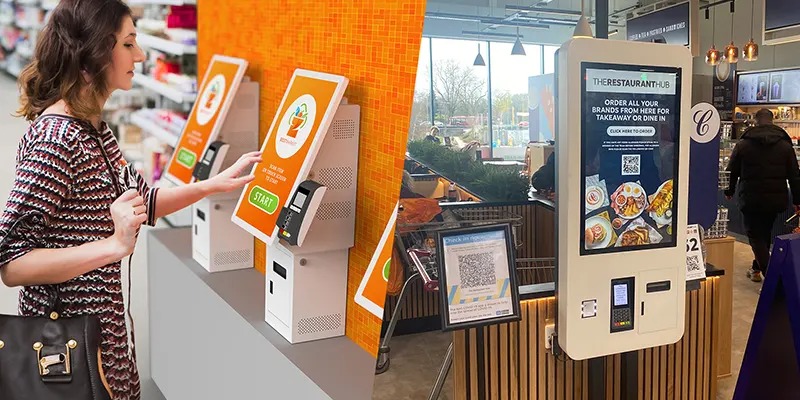
A Shelf Service Kiosk is a smart retail station that allows customers to scan products, check prices, apply loyalty rewards, and complete payments independently. Unlike traditional self-checkout counters placed only near exits, these kiosks can be positioned in different areas throughout the store.
This system helps reduce congestion because customers no longer need to gather in one crowded checkout zone. Instead, traffic spreads naturally across the store. Customers buying only a few items can complete purchases quickly without waiting in long lines.
The kiosks we installed featured touchscreens, barcode scanners, digital payment systems, and multilingual interfaces. The design focused on simplicity so customers of different age groups could use the system comfortably.
Another advantage was flexibility. Employees could spend less time handling repetitive checkout tasks and more time helping customers on the sales floor. This improved both operational efficiency and customer service quality.
3. Challenges Faced by the Supermarket Chain
Before introducing the kiosk solution, the supermarket chain faced several operational problems. The biggest challenge was heavy customer traffic during peak shopping hours. Checkout areas became overcrowded, creating stress for both shoppers and employees.
Staffing was another issue. Hiring and training additional cashiers increased labor costs, and employee turnover made scheduling difficult. The company needed a solution that improved speed without constantly expanding cashier operations.
Store layout limitations also created problems. Expanding traditional checkout counters would reduce valuable retail space that could otherwise be used for product displays and promotions.
We also noticed that customer psychology played an important role. Even moderate waiting times felt longer when shoppers saw crowded lines stretching across the front of the store. Reducing visible congestion became just as important as reducing actual wait times.
4. Our Solution Strategy
Instead of simply adding more self-checkout counters, we created a smarter traffic flow strategy. First, we studied customer behavior, shopping patterns, and busy-hour movement throughout the store.
We discovered that many customers purchased only a few items during rush periods. These shoppers wanted speed above everything else. Based on this insight, we positioned Shelf Service Kiosks near high-traffic product zones and express exit areas.
Customer education was also important. Employees helped shoppers learn how to use the kiosks during the early rollout stage. Clear instructions and simple touchscreen designs made adoption easier and reduced confusion.
The supermarket chain also integrated digital payment systems and loyalty rewards into the kiosks. This allowed customers to complete transactions quickly while still accessing promotions and discounts.
5. Results After Installation
The results became visible within a short time. Checkout waiting times dropped significantly during peak hours, and customer flow improved across several store locations.
Shoppers responded positively to the new system. Many customers appreciated having faster checkout options, especially when purchasing smaller baskets. Stores also appeared less crowded because checkout traffic became more evenly distributed.
Employees benefited as well. Staff members spent less time managing long cashier lines and more time assisting customers directly in shopping areas. This created a more relaxed and efficient store environment.
The supermarket chain also improved operational efficiency. Instead of constantly adding checkout lanes, the company optimized existing store space more effectively. This helped reduce costs while improving customer experience.
Retail studies continue showing strong growth in self-service technology adoption worldwide. The supermarket chain successfully positioned itself as a modern retailer focused on speed and convenience.
6. The Future of Smart Retail
Retail technology is changing quickly, and supermarkets are adapting to new customer expectations. Today’s shoppers want convenience, speed, and flexibility during every part of the shopping experience.
Shelf Service Kiosks represent part of a larger trend toward smart retail environments. More supermarkets are exploring self-service systems, mobile payments, AI-driven analytics, and digital shopping tools to improve efficiency.
The success of this project showed that reducing checkout congestion requires more than simply adding staff or expanding cashier counters. Smart technology, customer behavior analysis, and strategic store design all work together to create a better shopping experience.
Supermarkets that invest in customer-friendly technology today will likely stay more competitive in the future. Faster service no longer feels like a luxury — customers now expect it as part of everyday shopping.
7. Conclusion
Long checkout lines can quietly damage customer satisfaction and store performance. For this supermarket chain, solving the issue required a smarter approach rather than simply adding more cashiers.
By implementing Shelf Service Kiosks, the retailer reduced congestion, improved checkout speed, and created a more convenient shopping experience. Customers enjoyed faster transactions, employees worked more efficiently, and stores handled busy periods with far less pressure.
As retail technology continues evolving, smart self-service solutions will become increasingly important for supermarkets looking to improve both operational efficiency and customer loyalty.
8. FAQs
1. What is a Shelf Service Kiosk?
A Shelf Service Kiosk is a self-service retail station where customers can scan items, check prices, and complete payments independently.
2. How do Shelf Service Kiosks reduce checkout lines?
They distribute checkout activity across different store areas instead of concentrating customers in one front checkout zone.
3. Are self-service kiosks popular with customers?
Yes. Many shoppers prefer self-checkout because it saves time and offers greater convenience.
4. Do kiosks replace supermarket employees?
No. Employees still play an important role in customer service, store operations, and technical support.
5. Why are supermarkets adopting smart retail technology?
Retailers want to improve customer experience, reduce waiting times, optimize staffing, and increase operational efficiency.