
How We Helped a UK Retail Chain Reduce Customer Wait Times with Digital Notice Boards
UK retail stores face intense competition, and every minute a customer spends waiting is a minute they might spend walking out. One mid-sized chain discovered that their checkout queues were not just an inconvenience but a direct drain on revenue. This case study explains how they turned the problem around using a straightforward technology: digital notice boards.
1. The Challenge: Long Queues and Lost Sales During Peak Hours
A UK retail chain with seventeen locations faced a growing customer experience problem. During weekends and holidays, customers queued for unacceptable periods at checkouts, fitting rooms, and promotional zones. The root cause was not staffing but broken information delivery. The chain relied entirely on printed paper signs, handwritten boards, and occasional PA announcements.
This static approach could not keep up. Internal data showed eleven percent of customers entering stores on peak Saturday afternoons left without purchasing, and exit surveys blamed difficulty finding relevant information. Customers could not quickly check stock availability, whether a discount applied to their items, or where products were located. The chain had tried mobile apps and QR codes, but adoption remained under fifteen percent.
They needed a solution that worked instantly, required no downloads, and could be managed centrally. After evaluation, they chose to deploy digital notice boards across all locations.
2. Why Traditional Signage Could Not Keep Up
Printed signage has three problems that digital notice boards solve directly. First, it is static. Promotional end dates pass while outdated signs stay on display. Changing any information requires reprinting for seventeen stores. Second, paper cannot segment its audience. Every customer sees the same message regardless of their needs. Digital notice boards enable zone-specific messaging so each area displays relevant content. Third, paper provides no measurement. There is no way to know how customers responded to a sign.
Digital notice boards can pair with analytics to correlate content with sales data. The operational cost of paper is also deceptive. Across seventeen stores annually, design, printing, distribution, and labour exceeded what the first year of digital notice boards would cost. Customer focus groups described the paper-heavy environment as chaotic, and many admitted ignoring all signs after the first few minutes inside the store. Digital notice boards break this cycle by delivering fresh content that customers learn to trust. When a digital notice board shows accurate stock information, customers begin actively looking at other boards throughout the store.
3. The Solution: Zone-Based Digital Notice Boards
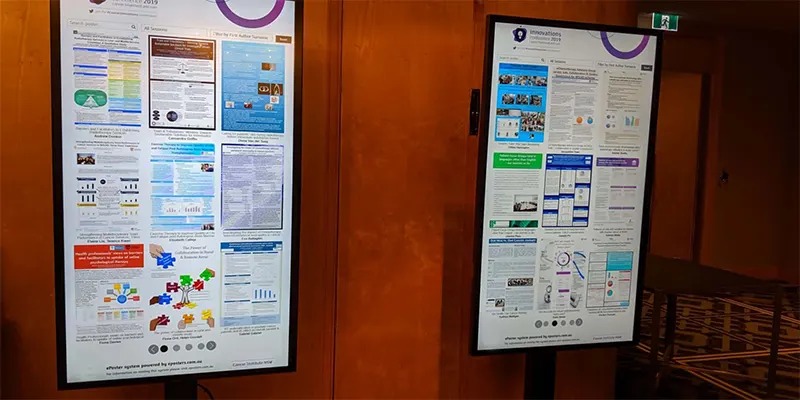
We deployed commercial 43-inch and 55-inch displays with 500-nit brightness, paired with Android media players connected to existing Wi-Fi. Each store was divided into five content zones. The entrance zone showed promotions, wayfinding maps, and announcements. The promotional aisle zone displayed active deals with countdown timers. Department-specific zones showed product highlights, restock alerts, and staff recommendations. The fitting room zone proved especially impactful.
Digital notice boards displayed an interactive interface asking customers if they needed a different size or colour. Tapping sent a notification to staff handheld devices, reducing average response time from four minutes to under sixty seconds. The checkout zone boards displayed estimated wait times from live point-of-sale data, suggested the fastest lane, and showed promotional content. Making wait times transparent reduced perceived wait significantly. From head office, the cloud platform gave marketing managers a single dashboard to create campaigns, schedule across stores and zones, and review analytics. A/B testing became standard.
4. Implementation Across Seventeen Locations
Rollout followed a three-phase approach over fourteen weeks. Phase one covered five pilot stores with thirty-five digital notice boards, running alongside paper signage for two weeks to gather baseline data. Phase two expanded to six northern stores, incorporating feedback on content rotation and brightness. Phase three covered the remaining six stores, with installation streamlined to two days per location. Three technical integrations were required.
The first connected checkout boards to the point-of-sale system through a REST API, enabling live queue data. The second integrated with inventory management, allowing department boards to display real-time stock. When an item sold out, the digital notice board updated within two minutes. The third connected fitting room boards to staff handheld scanners already used for inventory work, requiring no additional hardware.
Staff training took two hours per store, and each location designated a digital champion. An unexpected challenge was Wi-Fi reliability in older concrete buildings. We installed dedicated wireless access points for the digital notice board network, adding roughly seven percent to the budget but eliminating connectivity downtime.
5. Results: Measurable Improvements
In the twelve months after deployment, average checkout queue wait time during peak Saturday afternoons dropped from 4.7 to 2.2 minutes, a 53 percent reduction. Checkout boards balanced queue lengths, fitting room boards compressed dwell time, and promotional boards accelerated purchasing decisions. Customer satisfaction improved by 18 points from 72 to 90. Customers leaving without purchasing fell from 11 percent to 4 percent, recovering an estimated 1.8 million pounds in annualised revenue. Average basket size increased by 6.5 percent, driven by cross-selling content on checkout digital notice boards. Viewer engagement for digital notice boards was 34 percent versus 7 percent for paper signage.
The chain reported a 92 percent reduction in printed signage costs, saving approximately forty-two thousand pounds annually. Marketing workload dropped from six person-hours to under one per week. Store managers gained thirty minutes daily previously spent on manual signage. Fitting room staff reported reduced stress because the digital request system gave clear prioritisation.
Conclusion
The deployment of digital notice boards across this UK retail chain delivered a 53 percent drop in checkout queue times, an 18-point customer satisfaction gain, and recovery of 1.8 million pounds in annualised revenue. These results trace to one fundamental change: replacing static paper information with dynamic, zone-specific digital notice boards that customers trusted and acted on. Key success factors included zone mapping based on customer flow, integration with POS and inventory systems, and phased implementation. For retailers facing long queues or declining signage effectiveness, networked digital notice boards represent a high-ROI investment with a measurable payback period.
FAQs
1. How much do digital notice boards cost for a retail chain?
A: For fifteen to twenty stores, hardware, installation, and first-year software range from eighty thousand to one hundred and fifty thousand pounds. ROI was achieved within eleven months.
2. Can digital notice boards integrate with existing POS systems?
A: Yes. Most platforms support REST API integration. This deployment used the existing API layer with no custom development.
3. How long does multi-store deployment take?
A: The seventeen-store rollout took fourteen weeks. Each store required about two days for installation and training.
4. Do digital notice boards need dedicated content staff?
A: No. The cloud platform enables central scheduling. Routine updates take under one person-hour per week.
5. What happens during an internet outage?
A: Boards cache recent content and continue displaying it offline. Screens never go black.