
Outdoor Digital Signage for Public Transport Stations: Durable, Bright, and Efficient
Public transport stations serve thousands of passengers every day, making them ideal locations for digital communication. Outdoor digital signage has become an essential tool for bus stops, railway stations, metro terminals, and transit hubs, providing real-time information, advertising, and public service announcements.
However, outdoor environments present unique challenges. Displays must withstand harsh weather conditions, remain visible under direct sunlight, and operate efficiently around the clock. This article explores the key features and benefits of outdoor digital signage for public transport stations.
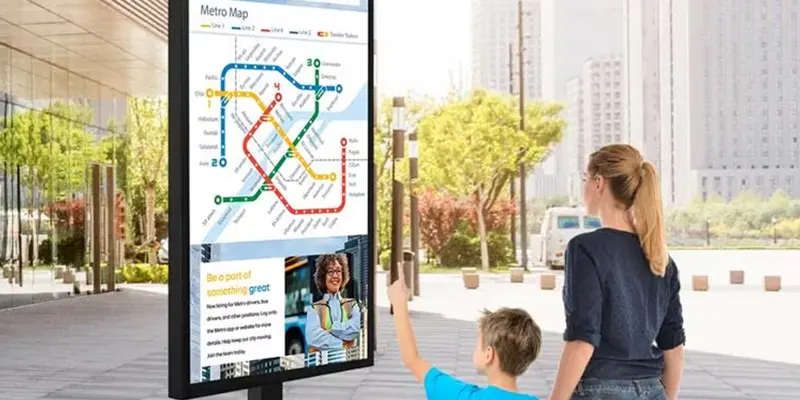
Why Outdoor Digital Signage Is Essential for Transport Stations
Real-Time Passenger Information
Passengers rely on accurate and timely information when using public transportation. Outdoor digital signage can display arrival times, departure schedules, route updates, and service disruptions in real time.
By connecting to transportation management systems, digital displays ensure passengers always receive the latest information, helping reduce confusion and improve travel experiences.
Enhanced Passenger Communication
Transport authorities can use digital signage to communicate important announcements, safety messages, and emergency alerts instantly.
Unlike static signs, digital displays allow content to be updated remotely, ensuring information remains relevant and accurate throughout the day.
Increased Advertising Opportunities
Public transport stations attract large audiences, making them valuable advertising locations. Outdoor digital signage enables operators to display dynamic advertisements that capture attention more effectively than traditional posters.
Advertisers can schedule campaigns based on time, location, or audience demographics, maximizing marketing effectiveness.
Key Features of Durable Outdoor Digital Signage
Weatherproof Construction
Outdoor digital displays must operate reliably in rain, snow, wind, and extreme temperatures. High-quality signage solutions feature weatherproof enclosures with IP-rated protection against water and dust.
These durable designs help ensure long-term performance while reducing maintenance requirements.
Vandal-Resistant Design
Public transport stations are often busy environments where displays may be exposed to accidental damage or vandalism. Toughened glass and reinforced metal enclosures provide additional protection.
Anti-scratch and anti-impact materials help extend the lifespan of outdoor signage installations.
Wide Operating Temperature Range
Outdoor displays must function consistently in both hot summers and cold winters. Advanced thermal management systems regulate internal temperatures and prevent overheating or freezing.
This capability ensures continuous operation regardless of seasonal weather conditions.
Long-Term Reliability
Transport stations often require displays to operate 24/7. Commercial-grade components are designed for continuous use, providing greater reliability compared to consumer-grade screens.
Long service life reduces replacement costs and improves return on investment.
The Importance of High Brightness and Visibility
Sunlight Readability
One of the most critical requirements for outdoor digital signage is visibility under direct sunlight. High-brightness displays typically offer significantly higher brightness levels than indoor screens.
This ensures text, images, and videos remain clear and readable even during bright daylight conditions.
Automatic Brightness Adjustment
Modern outdoor displays use ambient light sensors to automatically adjust brightness based on environmental conditions.
During sunny periods, brightness increases for better visibility. At night, brightness decreases to reduce glare and save energy.
Anti-Glare Technology
Reflections can negatively affect screen visibility. Anti-glare coatings and optical bonding technologies minimize reflections and improve readability.
Passengers can view important information clearly from different angles and distances.
Improved Passenger Experience
Bright and easy-to-read displays help passengers access information quickly, reducing stress and improving overall satisfaction.
Clear visibility is particularly important in crowded stations where people need information at a glance.
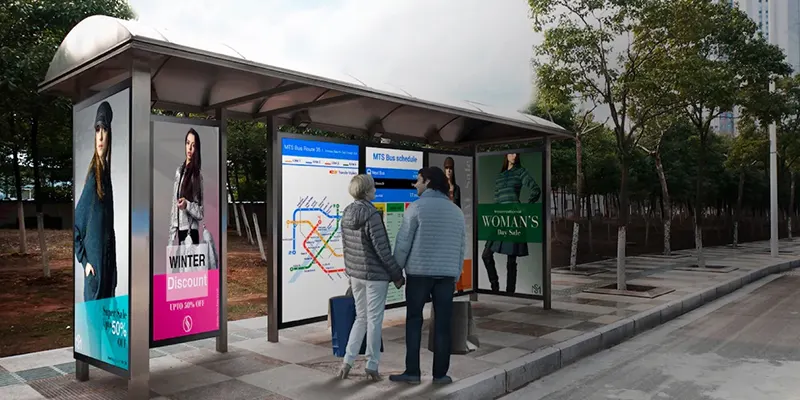
Energy Efficiency and Smart Management
Energy-Saving LED Technology
Modern outdoor digital signage uses energy-efficient LED backlighting to reduce power consumption while maintaining excellent brightness.
This helps transportation operators lower operating costs without sacrificing display performance.
Remote Content Management
Cloud-based content management systems allow operators to update content across multiple stations from a central location.
Remote management reduces labor requirements and enables rapid deployment of announcements, advertisements, and emergency messages.
Intelligent Scheduling
Content can be scheduled automatically based on time, day, or specific events. For example, transit updates can be prioritized during peak hours while advertising content is displayed during quieter periods.
This flexibility maximizes both communication effectiveness and revenue potential.
Reduced Maintenance Costs
Smart monitoring systems can detect technical issues before they become major problems. Operators receive alerts regarding temperature fluctuations, connectivity issues, or hardware faults.
Proactive maintenance helps reduce downtime and extend equipment lifespan.
Conclusion
Outdoor digital signage has become an indispensable solution for modern public transport stations. By delivering real-time information, enhancing passenger communication, and creating new advertising opportunities, these displays improve operational efficiency and customer satisfaction.
When selecting outdoor digital signage, transport authorities should prioritize durability, high brightness, weather resistance, and energy efficiency. With the right solution, public transport stations can provide reliable, engaging, and cost-effective communication for years to come.
FAQ
What brightness level is recommended for outdoor digital signage?
Outdoor digital signage typically requires brightness levels between 2,500 and 5,000 nits or higher to remain visible in direct sunlight. The exact requirement depends on installation location and environmental conditions.
Why is weatherproofing important for outdoor displays?
Weatherproofing protects displays from rain, dust, humidity, and temperature extremes. Proper protection ensures reliable performance and extends the lifespan of the equipment.
Can outdoor digital signage operate 24/7?
Yes. Commercial-grade outdoor displays are specifically designed for continuous operation and can run 24 hours a day, 7 days a week.
How does digital signage improve public transportation services?
Digital signage provides real-time travel information, service updates, emergency notifications, and wayfinding assistance, helping passengers make informed travel decisions.
Is outdoor digital signage energy efficient?
Modern outdoor displays use LED technology, automatic brightness control, and smart power management features to minimize energy consumption while maintaining excellent visibility.