
How Digital Signage Multiple Displays Are Supporting Coordinated Visual Communication?
Digital signage multiple displays are increasingly used in environments where information needs to be delivered across larger spaces or multiple touchpoints. Rather than relying on a single screen, organizations deploy groups of displays to create coordinated visual communication. This approach is now common in retail stores, transportation hubs, corporate buildings, and public venues. The shift reflects practical needs for consistency, visibility, and scalable information delivery rather than a focus on visual impact alone.
1. From Single Screens to Coordinated Display Networks
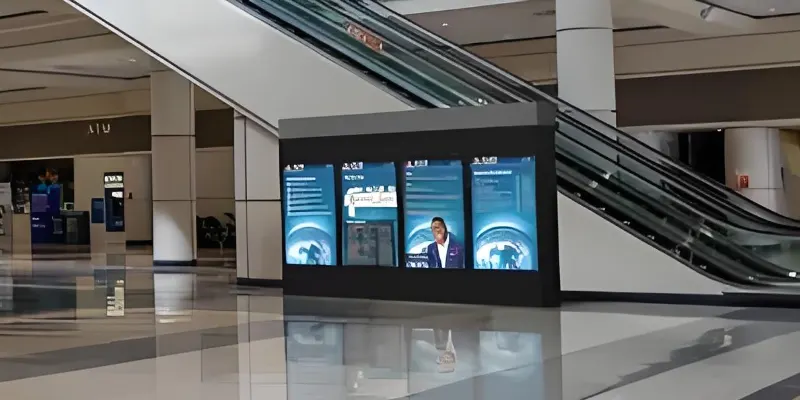
Early digital signage installations often focused on individual screens placed at key locations. As spaces became more complex, a single display proved insufficient to cover all information needs. Digital signage multiple displays allow organizations to distribute content across entrances, corridors, service counters, and waiting areas. Coordinated messaging ensures that visitors receive consistent information regardless of where they are within the space.
2. Managing Content Across Multiple Screens
Operating multiple displays introduces challenges related to content consistency and timing. Digital signage multiple displays are typically managed through centralized content systems that allow synchronized updates. This approach reduces the risk of outdated or conflicting information appearing on different screens. In practice, centralized control is valued for operational accuracy rather than creative flexibility, especially in environments with frequent updates.
3. Supporting Wayfinding and Movement in Large Spaces
In large indoor environments such as shopping centers or office complexes, digital signage multiple displays play an important role in guiding movement. Screens positioned at key decision points provide directional guidance, service information, or status updates. When messages are aligned across displays, visitors can move more confidently through unfamiliar spaces, reducing congestion and unnecessary staff intervention.
4. Reliability and Maintenance Considerations
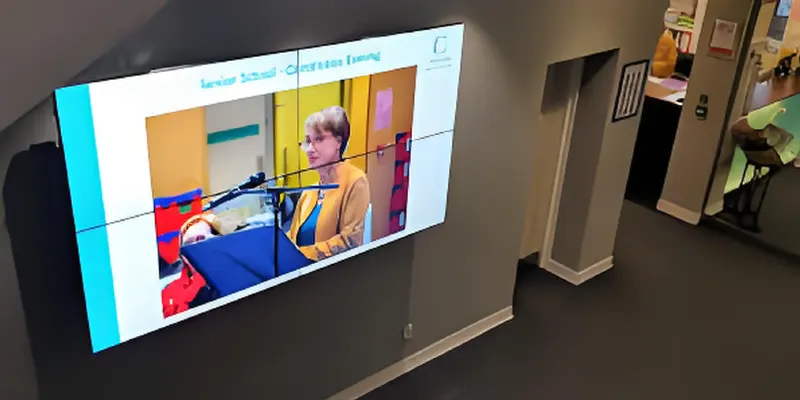
As the number of displays increases, reliability becomes a critical concern. A single screen failure within a multi-display setup can disrupt communication flow. Organizations using digital signage multiple displays often prioritize stability, remote monitoring, and simplified maintenance processes. These considerations help ensure consistent performance across the entire display network, particularly in high-traffic or long operating-hour environments.
5. Integration With Operational Systems
In more advanced deployments, digital signage multiple displays are connected to scheduling tools, queue management systems, or inventory platforms. This integration allows content to reflect real-time operational conditions across all screens simultaneously. While not every installation requires full integration, coordinated displays benefit from shared data sources that keep messaging accurate and relevant.
Conclusion
Digital signage multiple displays have become a practical solution for organizations managing complex spaces and high information demand. Their value lies in coordinated communication, operational consistency, and scalability rather than visual novelty. As physical environments continue to evolve, multi-display digital signage is increasingly treated as a foundational communication layer rather than a standalone visual feature.
FAQ
1. Where are digital signage multiple displays most commonly used?
They are widely used in retail stores, transportation facilities, office buildings, and public venues.
2. Are multiple displays mainly used for promotional content?
No. They are often used for wayfinding, service information, and operational updates.
3. How is content kept consistent across multiple displays?
Centralized content management systems synchronize updates across all screens.
4. Does using multiple displays increase maintenance complexity?
It can, which is why stability, remote monitoring, and simplified maintenance are important.
5. Is system integration required for digital signage multiple displays?
Basic setups work independently, while integration improves accuracy and responsiveness.