
How do advertising screens work?
1. What Are Advertising Screens
Advertising screens (digital signage) are electronic display systems used to show promotional and informational content such as videos, images, animations, and real-time messages. They are widely used in retail stores, shopping malls, airports, restaurants, hotels, and corporate buildings.
Compared with traditional printed posters, advertising screens allow instant updates, dynamic visuals, and centralized control, making them a more efficient and flexible marketing solution.
2. Key Hardware Components
Advertising screens rely on several integrated hardware parts that ensure stable performance and high-quality display.
Display Panel (LCD/LED):
The core visual component. LCD is commonly used for indoor environments due to its clear image quality, while LED is often used for brighter or larger displays.Media Player (Built-in or External):
This device processes and plays the advertising content. It decodes video, images, and animations and ensures smooth playback without interruptions.Mounting Structure:
Screens can be installed in different ways such as floor-standing kiosks, wall-mounted units, ceiling-hanging systems, or outdoor enclosures depending on usage scenarios.Connectivity Modules:
Wi-Fi, Ethernet, 4G, or 5G modules allow the screen to receive updated content remotely from a central system.Power Supply System:
Designed for long-term operation, often supporting 16/7 or 24/7 working schedules with stable voltage regulation and protection features.

3. Software and Content Management Systems
The Content Management System (CMS) is the “brain” of advertising screens, controlling all content and scheduling operations.
Content Upload & Management: Users can upload videos, images, and templates, then organize them into playlists or campaigns.
Smart Scheduling: Advertisements can be programmed to play based on time, location, or audience behavior (e.g., morning vs. evening content).
Multi-Screen Control: One CMS can manage hundreds or even thousands of screens across different cities or countries.
Remote Monitoring: Operators can check screen status, playback logs, and error reports in real time.
User Permissions: Different access levels can be assigned to team members for security and workflow control.
Cloud-based CMS platforms are now widely used, making management more flexible and scalable.
4. How Advertising Content Is Delivered
Content delivery relies on a structured digital workflow that ensures smooth and timely playback.
Content Creation: Designers create ads using videos, graphics, or interactive media.
Upload to CMS: The content is uploaded to a centralized management platform.
Distribution to Screens: The CMS sends content via internet or local network to selected devices.
Local Storage or Streaming: Screens either download files for offline playback or stream them directly.
Playback Execution: The media player decodes the content and displays it according to the schedule.
This system allows instant updates, meaning a promotion can go live across multiple locations within seconds.
5. Common Applications and Use Cases
Advertising screens are used across many industries due to their flexibility and visual impact.
Retail Stores: Display promotions, discounts, product introductions, and seasonal campaigns to attract customers.
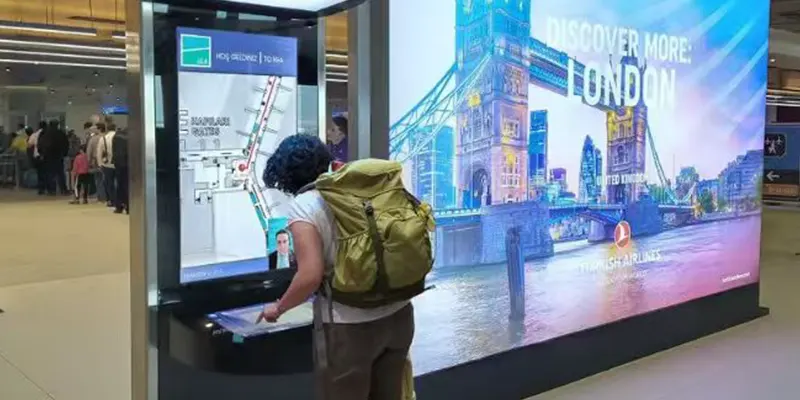
Shopping Malls: Provide navigation guidance, brand advertisements, and event announcements.
Restaurants & Cafés: Show digital menus, combo deals, and real-time order updates.
Transportation Hubs: Airports, train stations, and bus terminals use them for schedules, directions, and ads.
Corporate Environments: Share internal announcements, dashboards, KPIs, and training content.
Their adaptability makes them suitable for both commercial and informational purposes.
6. Key Benefits of Advertising Screens
Advertising screens provide significant advantages compared to traditional static signage.
High Visual Engagement: Moving images and videos attract more attention than printed posters.
Real-Time Updates: Content can be changed instantly without printing or physical replacement.
Cost Efficiency: Reduces long-term printing, distribution, and installation costs.
Targeted Messaging: Different content can be shown depending on time, location, or audience type.
Brand Modernization: Enhances the professional and modern image of a business.
Environmental Benefits: Reduces paper waste and supports sustainable marketing practices.
These advantages make digital signage a powerful tool for modern advertising strategies.
Conclusion
Advertising screens integrate hardware, software, and network systems to deliver dynamic and real-time promotional content. They help businesses improve customer engagement, reduce operational costs, and manage marketing campaigns more efficiently. If you are interested in upgrading your advertising strategy with digital signage solutions, you can explore professional systems and contact suppliers for customized options.
FAQ
Q1: What makes advertising screens better than traditional posters?
They allow dynamic content, remote updates, and real-time scheduling, making them far more flexible and engaging.
Q2: Do advertising screens require internet connection?
Not always. Some can work offline using preloaded content, but internet is needed for remote updates.
Q3: Can one system control multiple screens?
Yes, a CMS can manage multiple screens across different locations simultaneously.
Q4: Are advertising screens difficult to maintain?
No, most systems are designed for long-term use with minimal maintenance, mainly software updates and occasional hardware checks.