
How Interactive Whiteboards Can Help You Teach Better
What Are Interactive Whiteboards?
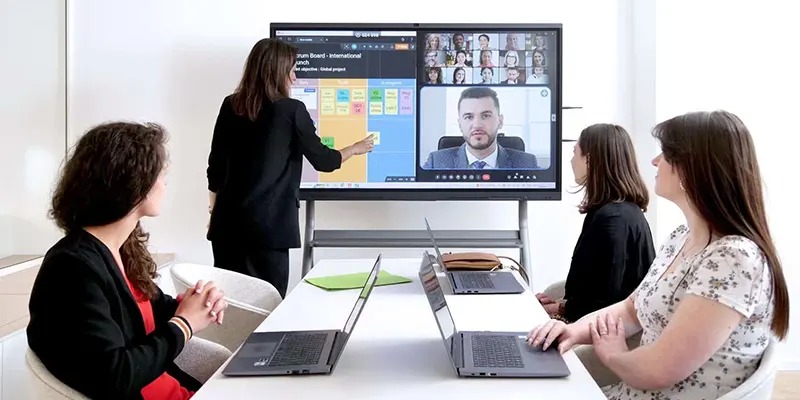
Interactive whiteboards are modern digital teaching tools designed to make classroom learning more engaging, collaborative, and efficient. They combine the functions of a traditional whiteboard, computer, touchscreen display, and multimedia system into a single device. Teachers can write, draw, display presentations, play videos, browse the internet, and annotate content directly on the screen during lessons. Unlike traditional boards, interactive whiteboards also allow students to participate actively by touching the screen, solving problems, moving objects, or joining interactive learning activities in real time.
These smart boards are widely used in schools, universities, and training environments because they support a more dynamic teaching style. Instead of relying only on textbooks and static notes, educators can use animations, images, audio, and interactive software to explain complex concepts more clearly. Many interactive whiteboards also support cloud storage and online learning platforms, making it easier to save lesson materials and share them with students after class. As digital education continues to grow, interactive whiteboards have become an important tool for creating smarter and more interactive classrooms.
Why More Schools Are Adopting Interactive Whiteboards?
The Rise of Digital Learning
More schools are adopting interactive whiteboards as digital learning becomes a major part of modern education. These smart boards help teachers create more engaging lessons using videos, animations, and interactive activities. They also support hybrid and online learning, making classrooms more flexible and connected. As students become more familiar with technology in daily life, schools are using interactive whiteboards to create learning environments that feel more modern and effective.
Growing Demand for Smart Classroom Technology
The demand for interactive whiteboards continues to grow as schools invest in smarter classroom solutions. These devices improve classroom interaction, simplify lesson delivery, and support collaboration between teachers and students. Many modern whiteboards also include cloud connectivity, touch-screen functions, and compatibility with online learning platforms. With education becoming increasingly technology-driven, interactive whiteboards are now seen as valuable tools for improving both teaching quality and student engagement.
How Interactive Whiteboards Improve Classroom Engagement?
Interactive whiteboards help create a more engaging and dynamic classroom environment by encouraging students to actively participate in lessons. Instead of simply listening to lectures or copying notes, students can interact directly with the screen through touch-based activities, educational games, quizzes, and group exercises. This hands-on approach makes learning more enjoyable and keeps students more focused during class.
The multimedia capabilities of interactive whiteboards also play an important role in improving engagement. Teachers can use videos, animations, images, and live demonstrations to explain difficult topics in a more visual and interesting way. These features help students understand concepts faster and improve memory retention. By combining technology with interactive teaching methods, interactive whiteboards make lessons feel more modern, collaborative, and effective for both teachers and students.
How Interactive Whiteboards Improve Teaching Efficiency?
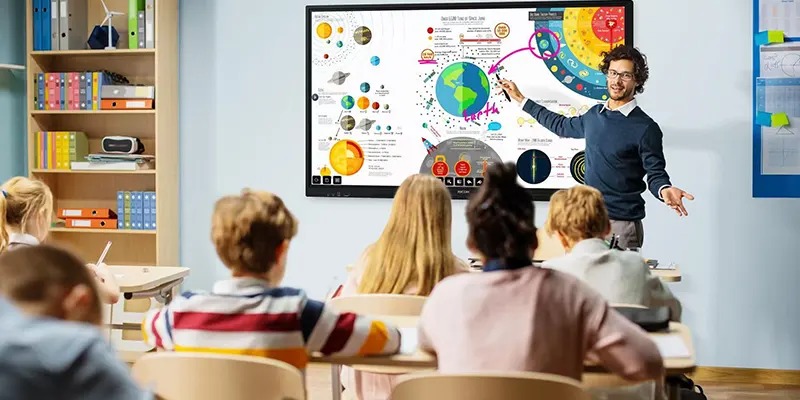
Interactive whiteboards help teachers save time and improve classroom efficiency by combining multiple teaching tools into one system. Teachers can quickly access presentations, videos, online resources, and lesson materials without switching between devices. Features like real-time annotation, screen sharing, and content saving also make lessons easier to manage and review later. By simplifying lesson delivery and classroom organization, interactive whiteboards allow teachers to focus more on student interaction and effective teaching.
Applications of Interactive Whiteboards in Different Subjects
Mathematics and Science Education
Mathematics and science often involve abstract concepts that are difficult to explain using static diagrams alone. Interactive whiteboards make these subjects far more visual and interactive.
Math teachers can demonstrate graph changes dynamically, rotate geometric figures, and solve equations step by step with visual support. Science teachers can simulate laboratory experiments, display microscopic processes, and explore virtual models of planets or molecules.
This visual approach helps students connect theory with practical understanding. Concepts that once seemed confusing become easier to grasp because students can actually see processes unfold in front of them.
Language and Creative Arts Classes
Interactive whiteboards are not limited to technical subjects. Language teachers use them for pronunciation practice, listening exercises, vocabulary games, and collaborative writing activities.
Creative arts classes also benefit greatly. Students can sketch digitally, edit images, and work together on creative projects directly on the board. Lessons become more interactive and imaginative compared to traditional paper-based activities.
Online and Hybrid Learning Environments
Hybrid learning has become increasingly common in modern education. Interactive whiteboards support this environment by connecting in-person and remote students seamlessly.
Teachers can share everything happening on the screen with online participants in real time. Remote students can still follow lessons, contribute ideas, and interact with classroom activities. This flexibility makes interactive whiteboards ideal for modern blended learning models.
Conclusion
Interactive whiteboards are no longer just advanced classroom gadgets. They are becoming essential tools for modern education. By improving engagement, supporting collaboration, simplifying lesson delivery, and enhancing digital learning experiences, they are changing how teachers teach and how students learn.
For schools, investing in interactive whiteboards means preparing for the future of education. For teachers, it means creating classrooms that are more interactive, efficient, and inspiring. As technology continues to evolve, interactive whiteboards will play an even bigger role in shaping smarter and more connected learning environments.
FAQs
1. What is the main purpose of an interactive whiteboard?
An interactive whiteboard is designed to make teaching more engaging and interactive by combining multimedia tools, touch technology, and digital collaboration features.
2. Are interactive whiteboards suitable for all age groups?
Yes. Interactive whiteboards can be used in elementary schools, high schools, universities, and even corporate training environments.
3. Can interactive whiteboards support remote learning?
Absolutely. Most modern interactive whiteboards integrate with online meeting platforms and cloud-based learning systems for hybrid and remote education.
4. Do interactive whiteboards improve student performance?
Studies suggest that interactive learning environments can improve student engagement, participation, and knowledge retention, especially when multimedia tools are used effectively.
5. What should schools consider before purchasing an interactive whiteboard?
Schools should evaluate screen size, touch technology, software compatibility, cloud integration, warranty coverage, and technical support services.