
Why Every Hospital Needs Digital Signage: Key Benefits and Insights
Healthcare is evolving faster than ever, and hospitals are no longer just places for treatment—they’re becoming fully connected ecosystems. One of the most visible shifts is the move from paper-based communication to digital systems. Digital signage sits right at the center of this transformation, acting like the nervous system of a hospital—constantly transmitting information where it’s needed most. According to recent insights, healthcare facilities are rapidly adopting digital tools to improve communication and patient-centered care, especially after the acceleration caused by global health challenges.
What Is Digital Signage in Hospitals?
Digital signage in hospitals refers to the use of electronic displays—such as LCD screens, video walls, and interactive kiosks—to deliver information, guidance, and communication throughout a healthcare facility. But it’s more than just screens; it’s an integrated communication system that connects departments, staff, and patients.
Core Components and Technology
At its core, digital signage combines hardware (screens), software (content management systems), and data integration. These systems can connect with hospital databases, scheduling systems, and even electronic health records. This means content isn’t just visually appealing—it’s accurate, timely, and personalized. Imagine a screen that updates automatically with patient-specific information or alerts staff about schedule changes in real time. That’s the power of integration.
Where It Is Used in Healthcare Facilities
You’ll find digital signage almost everywhere in modern hospitals:
Entrance areas for navigation and announcements
Waiting rooms for queue updates and educational content
Patient rooms for real-time care information
Staff areas for internal communication
Each placement serves a specific purpose, creating a seamless flow of information throughout the facility.
Key Benefits of Digital Signage in Hospitals
Improved Patient Experience
Hospitals can be stressful environments. Patients and visitors often feel anxious, confused, or overwhelmed. Digital signage helps reduce this stress by providing clear, visually engaging information. From educational videos to calming visuals, these displays create a more welcoming atmosphere. In fact, visual communication improves information retention significantly—people remember up to 65% of visual content after three days.
Efficient Wayfinding and Navigation
Large hospitals can feel like mazes. Getting lost not only frustrates visitors but also delays care. Digital signage solves this problem with interactive maps and step-by-step directions. Patients can quickly find their destination without needing to ask staff for help, which also reduces the workload on front desks. It’s like having a GPS system inside the hospital.
Reduced Perceived Wait Times
Waiting is inevitable in healthcare, but it doesn’t have to feel endless. Digital signage can display queue updates, estimated wait times, and engaging content to keep patients occupied. Research shows that digital displays can reduce perceived waiting time by up to 35%. That’s not just a minor improvement—it’s a major shift in how patients experience care.
Enhanced Communication and Real-Time Updates
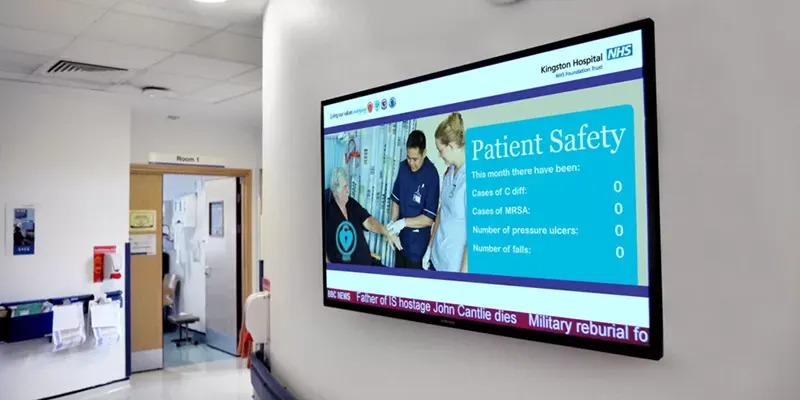
Hospitals are dynamic environments where information changes constantly. Digital signage allows instant updates across multiple screens, ensuring everyone receives the latest information. Whether it’s an emergency alert or a schedule change, communication becomes faster and more reliable.
Better Staff Coordination
It’s not just patients who benefit—staff do too. Digital signage can display shift schedules, performance metrics, and critical alerts in real time. This reduces reliance on emails or paper notices and ensures everyone stays aligned. When communication improves, efficiency follows.
Impact on Hospital Operations
Streamlining Workflow
Efficient communication is the backbone of hospital operations. Digital signage helps streamline workflows by reducing bottlenecks and improving coordination. For example, when patients can navigate independently, staff spend less time giving directions and more time focusing on care. This small change can have a ripple effect across the entire facility.
Reducing Administrative Burden
Updating traditional signage takes time and resources. With digital systems, updates can be made instantly from a central platform. This not only saves time but also reduces printing costs and minimizes errors. Over time, these savings add up, making digital signage a cost-effective solution.
Data and Statistics Supporting Digital Signage
Industry Growth Trends
The digital signage industry is booming, with projections estimating it will reach over $38 billion by 2030. This rapid growth reflects increasing adoption across industries, including healthcare. Hospitals are recognizing that digital signage is not just a trend—it’s a necessity.
Patient Engagement Metrics
Data shows that 52% of patients have received important health information through digital signage. Additionally, a large percentage of patients actively seek out digital displays for information. This highlights how effective these systems are in engaging and informing audiences.
Applications and Use Cases
Waiting Rooms and Lobbies
In waiting areas, digital signage serves multiple purposes: entertainment, education, and communication. Patients can watch health tips, learn about services, or stay updated on their appointment status. This transforms idle time into a productive and engaging experience.
Patient Rooms and Clinical Areas
Inside patient rooms, digital displays provide real-time updates about care plans, medications, and schedules. They also allow clinicians to share visual information, improving communication and understanding. This creates a more transparent and collaborative care environment.
Conclusion
Digital signage is no longer a luxury for hospitals—it’s a necessity. From improving patient experience to streamlining operations, the benefits are too significant to ignore. In a world where information moves at lightning speed, hospitals need tools that can keep up. Digital signage does exactly that, acting as a bridge between technology and human care. Hospitals that embrace this technology are not just keeping up with the times—they’re setting the standard for the future of healthcare.
FAQs
1. What is digital signage in healthcare?
Digital signage in healthcare refers to electronic displays used to share information, guide visitors, and improve communication within hospitals.
2. How does digital signage improve patient experience?
It provides clear directions, reduces wait-time stress, and offers engaging content, making hospital visits more comfortable.
3. Is digital signage expensive for hospitals?
While initial costs can be high, long-term savings and efficiency gains often outweigh the investment.
4. Can digital signage reduce workload for hospital staff?
Yes, it minimizes repetitive tasks like giving directions or updating information manually.
5. What is the future of digital signage in hospitals?
The future includes AI-driven personalization, real-time data integration, and smarter, more connected healthcare environments.