
Los Angeles Digital LCD Screen Project: Enhancing Customer Engagement and Brand Visibility
Project Overview
Background and Objectives
Located in one of the most competitive retail environments in the United States, this Los Angeles commercial complex aimed to elevate its in-store experience through innovation. With increasing pressure from e-commerce and changing consumer expectations, the management team sought a solution that could both capture attention and communicate effectively in real time. The goal was not just modernization, but transformation—creating a more immersive and interactive shopping journey.
Why Digital LCD Screens
Digital LCD screens were selected as the core technology due to their flexibility, high-definition display quality, and ability to deliver dynamic content. Unlike traditional signage, LCD displays enable businesses to update messaging instantly, making them ideal for fast-paced retail environments where promotions and campaigns frequently change.

Challenges Before Implementation
Limitations of Traditional Signage
Before the upgrade, the venue relied heavily on printed posters and static lightboxes. These formats required manual replacement, leading to higher operational costs and slower campaign execution. Additionally, once installed, static signage lacked the ability to adapt to real-time changes such as flash sales or event announcements.
Low Customer Engagement
In a city like Los Angeles, where consumers are constantly exposed to high-quality visual media, static displays struggled to capture attention. Visitors often overlooked traditional signage, resulting in missed opportunities for retailers to influence purchasing decisions.
Inconsistent Brand Presentation
With multiple tenants using different signage styles, the overall visual experience became fragmented. This inconsistency diluted the brand identity of the shopping center and reduced its perceived value.

Digital LCD Screen Solution
Strategic Deployment Plan
High-Traffic Area Placement
Screens were installed in key locations such as entrances, escalator zones, and main corridors. These areas were selected based on foot traffic analysis to ensure maximum visibility and engagement.
Optimized Viewing Angles
Each screen was positioned to provide optimal viewing angles, ensuring content remained clear and impactful regardless of where visitors stood.
Content Management System (CMS)
Centralized Control
A cloud-based CMS was introduced to manage all screens from a single platform. This allowed administrators to control content across multiple locations simultaneously.
Real-Time Updates
Promotions, announcements, and advertisements could be updated instantly, enabling businesses to react quickly to market trends and customer behavior.
Content Strategy
Dynamic Visual Content
The displays featured a mix of videos, animations, and high-resolution images designed to capture attention and increase dwell time.
Informational and Promotional Balance
Content included wayfinding information, store directories, promotional campaigns, and event notifications, ensuring both utility and marketing value.Implementation Process
Planning and Design
The project began with a detailed site survey and audience behavior analysis. Based on this data, screen placement and content strategies were carefully planned to align with visitor movement patterns.
Installation and Integration
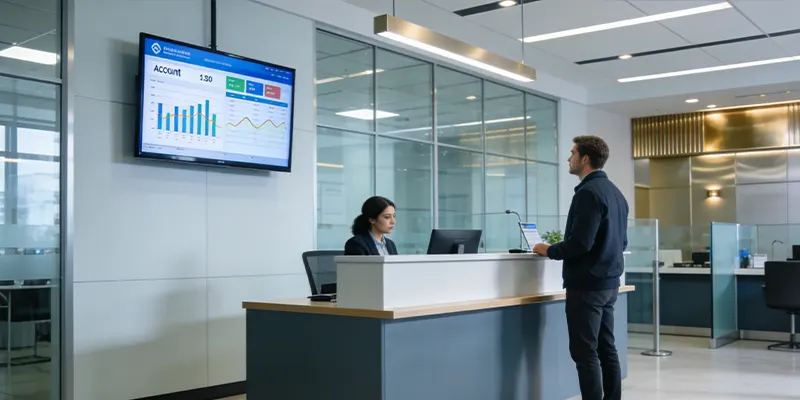
Professional teams handled the installation of commercial-grade LCD screens and integrated them with the CMS. The process was designed to minimize disruption to daily operations.
Testing and Optimization
Before full deployment, the system underwent rigorous testing to ensure seamless performance. Content layouts and schedules were optimized based on initial user interactions.
Results and Measurable Impact
Increased Customer Engagement
After implementation, the shopping center experienced a noticeable rise in customer interaction with digital displays. Moving visuals and interactive content successfully captured attention and encouraged exploration.
Enhanced Brand Visibility
The consistent use of high-quality digital content created a cohesive visual identity. Both the mall and its tenants benefited from stronger brand recognition and a more premium image.
Operational Efficiency Gains
The CMS significantly reduced the time and cost associated with updating content. Marketing teams could now launch campaigns within minutes instead of days.
Revenue Growth Opportunities
The digital signage network opened new revenue streams by offering advertising space to tenants and external brands, increasing the overall profitability of the project.
Conclusion
The Los Angeles Digital LCD Screen Project highlights how digital transformation can reshape customer experiences in modern retail environments. By replacing static signage with dynamic, centrally managed displays, the project achieved higher engagement, improved branding, and greater operational efficiency. In a fast-moving market like Los Angeles, adopting digital LCD technology is not just an upgrade—it is a strategic move toward long-term success.

FAQs
1.What industries can benefit from digital LCD screen projects?
Retail, hospitality, healthcare, transportation, and corporate environments can all benefit from digital signage solutions due to their versatility and scalability.
2.How easy is it to manage content on digital screens?
With a cloud-based CMS, content management is highly intuitive. Users can schedule, update, and monitor displays remotely with minimal technical expertise.
3.Are digital LCD screens energy-efficient?
Yes, modern LCD screens are designed to consume less power while delivering high brightness and clarity, making them suitable for continuous operation.
4.Can the system support multiple languages?
Absolutely. Content can be customized to display multiple languages, making it ideal for diverse audiences in cities like Los Angeles.
5.What maintenance is required for LCD digital signage?
Routine maintenance includes software updates, screen cleaning, and occasional hardware checks to ensure optimal performance.