
How Digital Price Signs Are Transforming Retail Pricing?
In today's competitive retail landscape, digital price signs have become an important technology for improving pricing accuracy and operational efficiency. These electronic shelf displays allow retailers to update prices, promotions, and product information in real time, replacing slow and error-prone paper tags. Retailers around the world are adopting digital price signs to respond quickly to market changes, run more effective promotions, and deliver a better shopping experience from shelf to checkout.
1. What Is Digital Price Signs?
Digital price signs, also known as electronic shelf labels (ESL), are small digital screens installed on retail shelves next to products. They typically use e-paper or LCD technology and are connected wirelessly to a central pricing system. Key benefits include instant price updates across hundreds or thousands of items, reduced labor costs, fewer pricing errors, and the ability to display dynamic information such as promotional prices, unit pricing, and nutritional details. This technology is especially valuable in supermarkets, pharmacies, and electronics stores where price changes occur frequently.
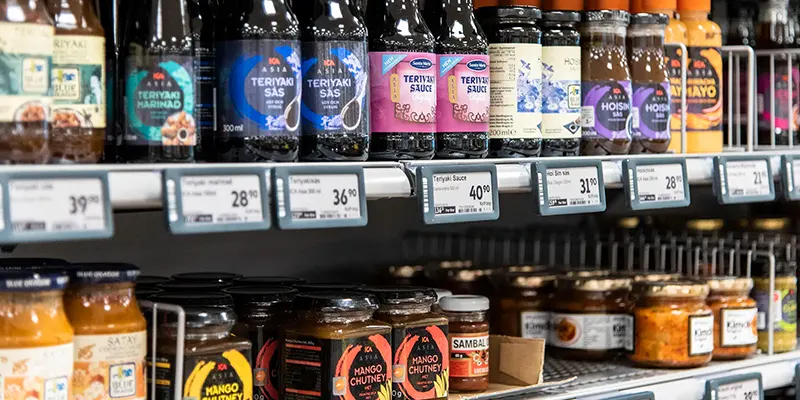
2. Common Challenges in Traditional Retail Pricing Practices
Traditional paper-based price tags present several ongoing difficulties for retailers. Changing prices or launching promotions requires significant manual labor to print and replace tags across all store locations, which is time-consuming and prone to human error. Inconsistent pricing between online and offline channels or across different stores can damage customer trust. Additionally, the inability to quickly adjust prices in response to competitor moves or inventory levels limits pricing flexibility. Digital price signs directly address these issues by enabling centralized, instantaneous control over shelf pricing.
3. Case Study: A Grocery Retailer's Digital Price Signs Implementation
One of Europe's leading grocery retailers, has successfully implemented digital price signs across many of its stores. The company deployed tens of thousands of electronic shelf labels to modernize its pricing operations. These digital price signs are integrated with the retailer's central pricing and inventory management system, allowing staff to update prices and promotions across all locations with just a few clicks. Following rollout, this company reported significantly faster promotion execution, reduced pricing mistakes, and improved operational efficiency in its high-volume stores.
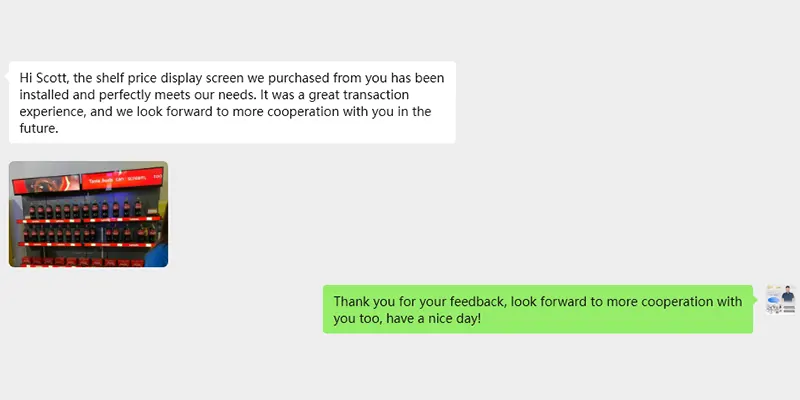
4. How to Choose and Implement Digital Price Signs?
Choosing the right digital price signs involves evaluating screen technology (e-paper offers excellent readability and low power consumption), battery life, wireless connectivity, and integration capabilities with existing POS and ERP systems. Best practices include starting with a pilot in one category or store, ensuring strong network coverage, designing clear and customer-friendly layouts, and providing staff training. Regular system monitoring and data security measures are also essential to maintain reliability and protect sensitive pricing information.
5. Business Impact and Data Validation of Digital Price Signs
Retailers using digital price signs commonly experience measurable improvements. Studies and implementations show substantial reductions in labor hours previously spent on price changes, along with a sharp decrease in pricing errors. Faster promotion deployment often leads to better sales performance during campaigns. Additional benefits include improved price consistency between physical stores and e-commerce platforms and enhanced ability to implement dynamic and localized pricing strategies, helping retailers remain competitive in a rapidly changing market.
Conclusion
Digital price signs mark a significant shift in how retailers manage one of their most critical elements — pricing. By solving long-standing operational challenges and enabling greater agility, they help modern retailers operate more efficiently while improving the customer shopping experience. As technology continues to advance with better connectivity and AI-driven pricing tools, digital price signs are expected to play an even larger role in the future of retail. Strategic implementation with a focus on integration and usability will be key to maximizing their value.
FAQ
1. What are digital price signs?
Digital price signs are electronic displays placed on store shelves that show product prices and can be updated remotely in real time.
2. How do digital price signs differ from traditional paper tags?
They allow instant centralized updates, reduce manual labor, eliminate printing costs, and minimize human errors.
3. What are the main steps to implement digital price signs?
Assessment of needs, technology selection, system integration, pilot testing, full rollout, and staff training.
4. Do digital price signs increase sales?
They support faster and more accurate promotions, which often lead to improved promotional sales performance.
5. Are digital price signs suitable for small retailers?
Yes. Scalable solutions are available, and even smaller stores can benefit from reduced labor and greater pricing accuracy.
6. How secure are digital price signs?
Modern systems use encrypted wireless communication and role-based access controls to protect pricing data.