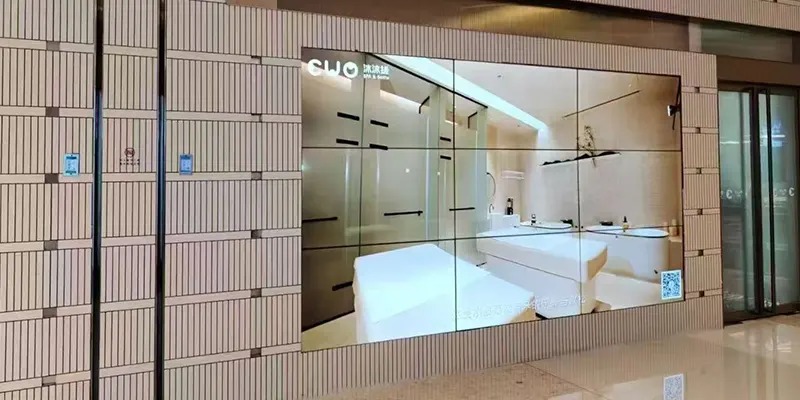
Video wall displays are increasingly used in control rooms, retail environments, transportation hubs, and corporate lobbies. Originally installed to create large, eye-catching visual experiences, they are now widely recognized as practical tools for managing information and improving communication efficiency. Based on feedback from several customers who deployed video wall solutions, the video wall has evolved into an essential infrastructure for large-scale visual communication.
1. From Large Display to Information Management Platform
A retail chain installed a video wall display at the entrance of its flagship store to highlight promotional campaigns. After several months of use, store managers reported that the screen was used for more than marketing.
Through the centralized video wall system, the display began showing store navigation, promotional schedules, and event announcements. Customers found it easier to locate product zones and understand ongoing promotions, reducing the need for staff assistance.
2. Improving Operational Visibility in Control Environments
A logistics company adopted a video wall system for its operations center. The main goal was to monitor delivery routes, warehouse activities, and scheduling information in real time.
By integrating operational data into the video wall digital sign, managers were able to visualize multiple data streams simultaneously. According to company feedback, this setup improved decision-making speed and reduced communication delays between departments.
3. Enhancing Customer Experience in Public Spaces
A transportation terminal installed a video wall to display travel information and service announcements. Previously, passengers relied on several small screens placed around the hall.
With a large-format video wall digital sign, critical information such as departure times, service notices, and directions became easier to read from a distance. Customer feedback indicated that travelers could locate updates more quickly, which helped reduce confusion during peak hours.
4. Reliability as a Long-Term Requirement
Customers emphasized that reliability is one of the most important factors when deploying video wall systems. Because these displays often run continuously, stable performance and consistent brightness across panels are essential.
One corporate client noted that once the video wall digital sign became part of their daily communication infrastructure, any downtime could directly impact operations, making durable hardware and stable systems critical.
5. Supporting Centralized Content and Multi-Screen Management
Another advantage frequently mentioned in customer feedback is centralized management. With modern content management systems, a video wall digital sign video wall can display synchronized visuals or different content segments across multiple screens.
This flexibility allows organizations to adapt the display for various purposes—from live data dashboards to marketing campaigns—without changing the physical installation.
Conclusion
Customer feedback shows that video wall displays are no longer viewed solely as large visual attractions. Instead, they function as powerful communication platforms capable of presenting complex information clearly and efficiently. By integrating reliable hardware with centralized content management, the digital sign video wall supports better decision-making, clearer messaging, and improved visitor experience across multiple industries.
FAQ
What industries commonly use video wall displays?
They are widely used in control rooms, retail stores, transportation hubs, corporate lobbies, and exhibition spaces.Are video walls only for visual impact?
No. Many organizations use them for operational monitoring, data visualization, and real-time information display.Why is reliability important for video walls?
Because they often run continuously, stable performance ensures consistent communication and avoids operational disruptions.Can video wall displays show different content on each screen?
Yes. Modern systems allow flexible content layouts across multiple panels.Do video walls require complex installation?
Installation may involve planning and calibration, but once deployed, centralized systems simplify content management.