
How We Helped a Los Angeles Boutique Retailer Solve Declining Foot Traffic with Digital Signage
For six years, a boutique clothing store in Los Angeles' Arts District relied on a single static storefront sign. By early 2025, foot traffic had dropped 34% year-over-year as new competitors opened with brighter modern storefronts. The owner knew they needed a change. That's when we introduced a digital signage solution that transformed their storefront and reversed the decline within eight weeks.
1. The Challenge: Why Traditional Store Signs Were No Longer Driving Customers In
The store's original sign was a backlit acrylic panel installed in 2019. Its LEDs had dimmed by 40%, and the static white-background design blended into surrounding storefronts. In a competitive district like the Arts District, a static sign couldn't stand out. Changing the message required ordering new acrylic panels at $300–$500 each, with 7–10 day production wait times—so promotions were often outdated before the sign went up.
Foot traffic analytics revealed that 83% of walk-in customers came from spontaneous street discovery. The storefront sign was their single most important marketing asset. The decline was not a pricing or product issue. It was a visibility problem. The store needed a sign that could change in real time, attract attention day and night, and support a fast promotional calendar without costly physical replacements.
2. The Solution: How We Implemented a Digital Signage Strategy
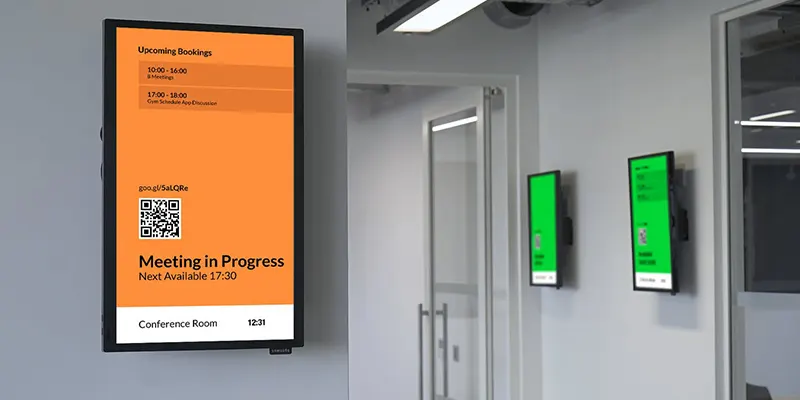
We installed a commercial-grade 55-inch high-brightness LCD panel (2,500 nits) in the store's existing display window, facing outward. It was paired with a cloud-based content management system that let the owner update the screen from any device in under two minutes. Total hardware cost: $2,800 installed—far less than replacing the entire storefront sign. We designed a content rotation with three blocks:
(1) brand identity visuals during off-peak hours, (2) promotional content (sales, new arrivals) scheduled for peak traffic windows (11 AM–2 PM and 4–7 PM), and (3) dynamic content like weather-triggered ads ("Rainy day? 20% off coats") and flash sale countdown timers. The software supported A/B testing between weekday and weekend headlines to track which drove more visits. The system went live in two days with zero disruption to operations.
3. The Results: 47% Increase in Foot Traffic and 32% Higher Conversion Rate
Eight weeks after installation, foot traffic increased 47% compared to the same period the prior year. Conversion rate rose from 18% to 24%—a 32% improvement. The owner noted, "We ran a 'Happy Hour' promotion every Thursday from 4–6 PM on the screen, and those two hours became our highest-revenue window of the week." Average transaction value grew 12%, driven by cross-promotional content like "Complete the look—15% off accessories." Social media following grew 28% as passersby photographed the rotating display. Cost per acquisition dropped from $12.40 to $7.80. The system paid for itself within 22 weeks purely from incremental new customer revenue.
4. Why Digital Signage Outperforms Static Signage in Retail
Static signage has three hard limits: it cannot change without physical re-manufacturing, it delivers the same message regardless of time or weather, and it cannot capture attention through motion or video. Digital signage solves all three. Studies show digital displays capture 400% more views than static signs and increase brand recall by 48%.
A single digital system can serve as a storefront sign, an in-store menu board, and a promotional screen simultaneously. Maintenance costs drop too—no more reprinting, shipping, or installing physical replacements, saving $1,200–$2,400 per year for most small to mid-sized retailers. Commercial-grade panels are now affordable, weather-resistant, and manageable from a smartphone.
5. Key Takeaways for Retailers Considering Digital Signage
Five lessons from this case. First, plan content strategy before buying hardware. Know what messages you need and when. Second, buy a high-brightness panel (1,500–3,000 nits) for storefront use. Standard consumer TVs at 200–400 nits are invisible outdoors. Third, choose cloud-managed software for remote updates and scheduling. If you need a USB stick to change content, you lose the core advantage. Fourth, measure everything: door counters, QR code scans, sales per promotion. The 12% order value increase came from A/B testing. Finally, design content for viewer context. A rainy Tuesday customer and a sunny Saturday browser need different messages. Digital signage lets you address both if you plan your calendar.
Conclusion
This case proves that digital signage is a strategic investment, not just a technology upgrade. A static sign tells one story. A digital sign adapts to time, weather, and audience. For retailers facing declining foot traffic or outdated storefronts, digital signage delivers measurable traffic and revenue gains within weeks at a cost that pays for itself in under six months. If your storefront still uses a static sign, you may be leaving customers and revenue on the sidewalk.
FAQ
1. What is digital signage and how does it work for retail stores?
2. How much does a digital signage system cost?
3. Can I use my existing static sign frame for a digital signage upgrade?
Often yes. A digital panel can be mounted inside an existing backlit sign cabinet or display window frame, reducing installation costs. A professional installer can confirm compatibility without structural changes.
4. Is digital signage effective for small businesses?
Yes. Small businesses often see the highest relative ROI because foot traffic is their primary acquisition channel. This store achieved a 47% traffic increase from a single $2,800 screen.
5. How long does it take to see results after installing digital signage?
Most retailers see improvements within 2–4 weeks. In this case, traffic increased in the first week and the investment was recovered by week 22. Results depend on location, content quality, and update frequency.