News
-
11-22 2025
How Do Interactive Touch Displays Work?
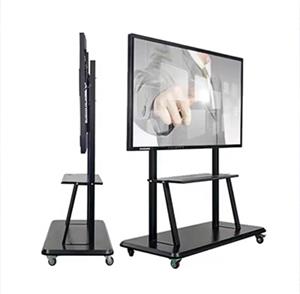
Interactive touch displays work by converting physical gestures—such as tapping, swiping, and pinching—into digital actions using built-in sensors and processing technology. These displays rely on components like the display panel, touch sensor overlay, controller board, and software interface to deliver fast, accurate responses. Different technologies, including resistive, capacitive, infrared, and optical touch systems, determine how touches are detected and how precise the interaction is. Because they are intuitive, responsive, and easy to use, interactive touch displays are now widely used in education, retail, corporate settings, public kiosks, and many other environments. As advancements such as AI-driven touch systems and haptic feedback continue to evolve, touch displays will become even more immersive and efficient in the future.
-
04-18 2024
Smart interactive whitebroad
Smart Interactive Whiteboard is more popular
-
04-07 2023
Double sided advertising machine will be the mainstream
In the current digital signage market, diversification of application forms has become a consensus in the industry. Mainstream display terminals such as wave crystal splicing screens, DLP splicing screens, and LED displays can all be digital signage applications as long as they are matched with appropriate solutions. , This does not hinder the dual-screen advertising machine, this new application form has become an important driving force for the growth of the digital signage market.