
What Is Digital Signage in Grocery Stores?
Digital signage in grocery stores refers to the use of digital screens to display product information, promotions, pricing, and guidance throughout the store. These displays replace or support traditional printed signs, helping retailers communicate more effectively with shoppers. This article explains what grocery store digital signage is, how it is used, its benefits, common display types, and why it is becoming essential for modern grocery retail.
1. Digital Signage in Grocery Stores
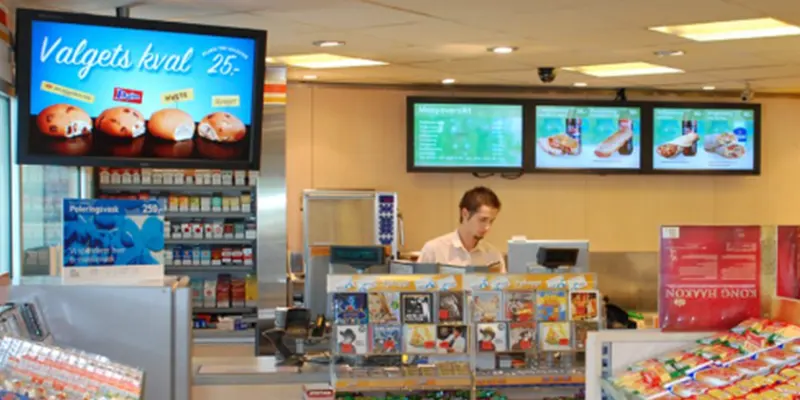
Grocery store digital signage includes electronic displays installed at entrances, aisles, shelves, checkout areas, and service counters. These screens show dynamic content that can be updated in real time.
Common content includes:
Promotional offers
Product prices and discounts
Nutritional information
Brand advertisements
Store announcements
By delivering visual and timely information, digital signage enhances the shopping experience and improves store efficiency.
2.Uses of Digital Signage in Grocery Stores
Promotional and Advertising Displays
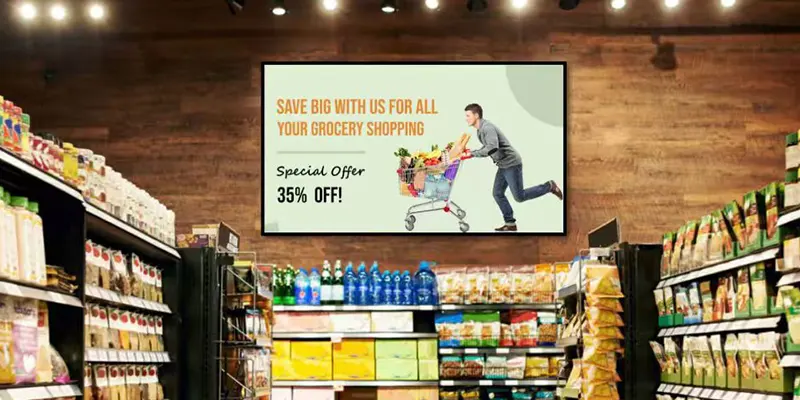
Digital screens highlight weekly deals, limited-time discounts, and seasonal promotions. Moving visuals attract more attention than printed signs, increasing the chance of impulse purchases.
Electronic Shelf Labels and Price Displays
Digital shelf-edge displays show accurate pricing and product details. Prices can be updated instantly, reducing errors and labor costs.
Wayfinding and Store Navigation
Large screens help shoppers locate product categories, departments, and checkout counters. This is especially useful in large supermarkets.
Checkout and Queue Displays
Screens near checkout areas show queue numbers, promotional messages, and last-minute offers, improving wait-time perception.
3. Benefits of Digital Signage in Grocery Stores
Digital signage delivers both marketing and operational value to grocery retailers. By presenting information in a dynamic and visually engaging way, it directly influences customer behavior and store efficiency.
Stronger Customer Engagement: Digital screens naturally attract attention through motion, color, and video. Shoppers are more likely to notice promotions displayed on digital signage than on printed posters, especially in busy aisles or at aisle ends.
Increased Sales and Impulse Purchases: Strategically placed screens promote discounts, bundle offers, and seasonal products. These timely messages encourage impulse buying and help increase the average basket size.
Real-Time Accuracy: Prices, promotions, and product availability can be updated instantly. This prevents pricing errors, ensures compliance, and builds customer trust.
Lower Long-Term Costs: By reducing the need for printed posters, shelf tags, and manual updates, digital signage lowers ongoing operational and material costs over time.
Enhanced Shopping Experience: Clear pricing, promotions, and guidance reduce confusion and help customers shop faster and more confidently, improving overall satisfaction.
4. Popular Types of Digital Signage Used in Grocery Stores
Different areas of a grocery store require different signage formats. Retailers often combine multiple display types to maximize impact.
Entrance and Window Displays: These screens attract shoppers from outside the store and promote daily specials, seasonal campaigns, or featured brands.
Aisle-End (Endcap) Displays: Located in high-traffic areas, these screens are ideal for showcasing promotions, new product launches, and high-margin items.
Shelf-Edge Digital Displays: Small digital screens placed directly on shelves show prices, discounts, and product details. They ensure pricing accuracy and improve visibility.
Checkout Area Displays: Checkout screens promote last-minute items such as snacks, drinks, and loyalty programs while helping reduce perceived waiting time.
Interactive Touchscreens: Touch-enabled displays allow customers to search products, check stock availability, view recipes, or access nutritional information, enhancing convenience.
5. How Digital Signage Improves Grocery Store Operations
Beyond marketing, digital signage plays a key role in improving store operations and staff efficiency.
Centralized Content Management: Managers can update content across one store or multiple locations from a single system, ensuring consistency and saving time.
Reduced Staff Workload: Automated price and promotion updates eliminate the need for staff to manually replace printed signs, allowing them to focus on customer service.
Faster Response to Market Changes: Stores can react quickly to inventory levels, competitor pricing, or sudden demand by adjusting promotions in real time.
Improved Compliance and Accuracy: Digital signage reduces pricing mismatches between shelves and checkout systems, helping avoid customer complaints and regulatory issues.
Data-Driven Decision Making: Some systems support analytics, allowing retailers to track engagement and optimize content placement for better performance.
6. Summary
Digital signage in grocery stores is a powerful tool that enhances customer engagement, improves operational efficiency, and drives higher sales. By delivering real-time promotions, clear pricing, and helpful guidance, digital displays create a smarter and more enjoyable shopping experience.
If you are looking to implement digital signage in your grocery store or want to learn more about customized solutions, please contact us anytime. Our team is ready to help you upgrade your retail communication system.
7. FAQ
1. Is digital signage expensive for grocery stores?
Costs vary, but scalable solutions are available for stores of all sizes.
2. Can prices be updated remotely?
Yes, most systems support centralized, real-time updates.
3. Does digital signage work with POS systems?
Many digital signage platforms integrate with POS and inventory systems.
4. Is digital signage reliable in busy retail environments?
Yes, commercial-grade displays are designed for long operating hours.
5. Can digital signage increase sales?
Yes, studies show digital displays significantly improve promotion visibility and impulse buying.