
How Smart Digital Wayfinding Signage Is Reshaping Public Spaces?
Digital Wayfinding Signage has become an essential part of modern public environments. As cities grow larger and buildings become more complex, traditional static signage is no longer sufficient to guide people efficiently. Airports, hospitals, shopping malls, corporate campuses, and transportation hubs are increasingly adopting digital wayfinding systems to improve navigation, enhance user experience, and reduce operational friction. With the integration of LCD displays, interactive touch screens, and real-time content management, digital wayfinding is moving from a “nice-to-have” feature to a core infrastructure component.
1. What Digital Wayfinding Signage Really Means Today?
Digital Wayfinding Signage refers to electronic navigation systems that guide visitors through physical spaces using digital displays. Unlike printed maps or fixed signs, these systems can update content dynamically, reflect real-time changes, and support multiple languages. Modern Digital Wayfinding Signage often includes touch-enabled kiosks, large-format LCD displays, mobile integration via QR codes, and centralized content management platforms. The goal is not only to show directions, but to reduce confusion, shorten travel time, and improve overall spatial efficiency. 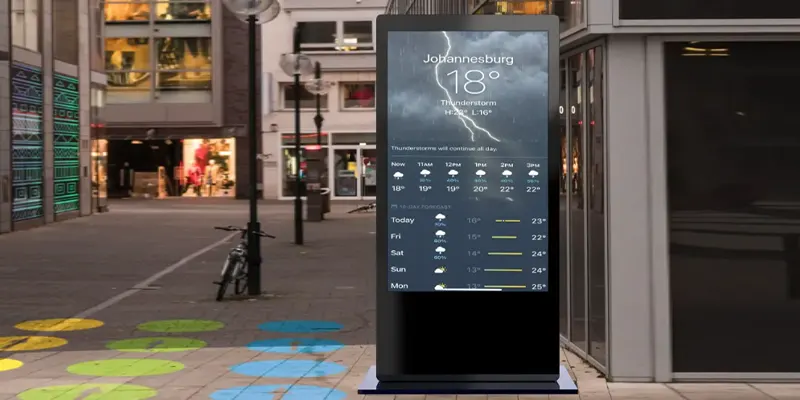
2. Key Use Cases Driving Global Adoption
One of the strongest drivers behind Digital Wayfinding Signage adoption is large-scale public infrastructure. Airports use it to manage passenger flow, hospitals rely on it to help patients and visitors reach departments quickly, and shopping malls deploy it to increase dwell time and guide customers toward specific stores. In smart city projects, Digital Wayfinding Signage is also used outdoors to support tourists and pedestrians, often combined with public information and advertising functions. These practical benefits make Digital Wayfinding Signage a high-ROI investment rather than a decorative upgrade.
3. Technology Trends Behind Digital Wayfinding Signage Systems
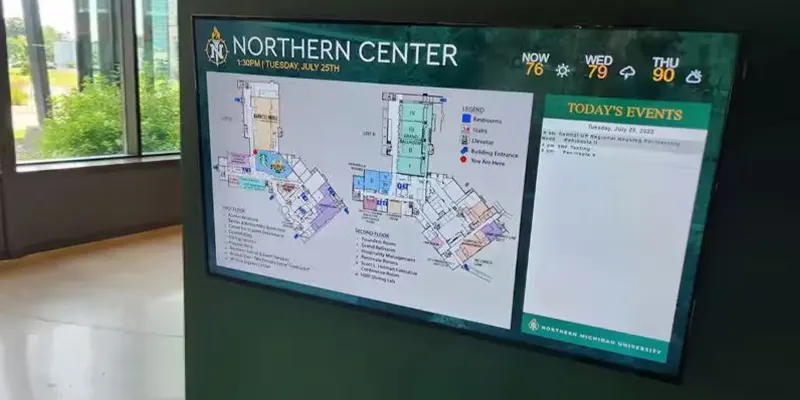
From a technology perspective, digital wayfinding signage systems are evolving rapidly. High-brightness LCD panels ensure visibility in different lighting conditions, while industrial-grade components improve reliability in long-hour operation scenarios. Cloud-based CMS platforms allow operators to update maps and routes remotely, and data analytics tools provide insights into user behavior. Touch accuracy, screen durability, and system stability are becoming just as important as visual design, especially in high-traffic environments.
4. Business Value Beyond Navigation
Beyond basic navigation, digital wayfinding signage delivers measurable business value. Retail operators use it to promote stores and campaigns, hospitals use it to reduce staff workload by minimizing directional inquiries, and corporate buildings leverage it to reinforce brand identity. For advertisers and property owners, the same screens can double as digital advertising platforms, creating new revenue streams. This multifunctional role is one reason why demand for LCD-based wayfinding solutions continues to grow globally.
5. Market Outlook and Industry Direction
Looking ahead, digital wayfinding is expected to integrate more deeply with AI, IoT, and mobile ecosystems. Personalized navigation, accessibility-focused design, and multilingual support will become standard requirements. As hardware costs decrease and software capabilities expand, adoption will accelerate not only in developed markets but also in emerging regions investing in infrastructure modernization.
6. Conclusion
Digital wayfinding is no longer just about helping people find their way. It represents a shift toward smarter, more responsive public spaces that combine information, technology, and user experience. As organizations continue to prioritize efficiency and visitor satisfaction, digital wayfinding will remain a key component of future-ready environments.
7. FAQ
1. What is the difference between digital wayfinding and digital signage?
Digital Wayfinding Signage focuses on navigation and direction, while digital signage is primarily used for information display and advertising. In practice, many systems combine both functions.
2. Are LCD screens suitable for long-term wayfinding use?
Yes. Commercial-grade LCD screens are designed for extended operation and are widely used in wayfinding applications due to their clarity, stability, and cost efficiency.
3. Can digital wayfinding systems be customized for different buildings?
Absolutely. Most systems are customized based on floor plans, user flow, language requirements, and branding needs.
4. Is digital wayfinding difficult to maintain?
With a centralized content management system, updates and maintenance are relatively simple and can often be done remotely.
5. What industries benefit most from digital wayfinding?
Airports, hospitals, shopping malls, transportation hubs, universities, and large office complexes benefit the most due to high visitor volume and complex layouts.