
What Benefits of Interactive Whiteboards in the Classroom?
Technology has quietly transformed nearly every part of our lives. So why should classrooms stay stuck in the past? Interactive whiteboards are reshaping modern education, turning static lessons into dynamic experiences. But what exactly makes them so powerful?

Improving Student Focus and Classroom Discipline
Dynamic Visual Stimulation
Interactive whiteboards naturally capture attention because they combine movement, color, sound, and touch. Instead of staring at static notes, students watch content evolve in real time. Diagrams appear step by step. Key points are highlighted instantly. Videos and animations break up long explanations. This dynamic flow keeps students mentally present. When the lesson feels alive, their minds stay engaged.
Smooth Lesson Transitions
One common cause of distraction is downtime—those small pauses while a teacher writes on the board or switches materials. Interactive whiteboards eliminate much of that gap. Teachers can transition from a presentation slide to a short video, then to a quiz, all within seconds. The seamless flow keeps momentum strong, and students remain focused because there’s no “dead air” in the lesson.
Interactive Participation Reduces Disruptions
When students know they may be invited to interact with the board, they stay alert. Participation creates accountability. Instead of being passive observers, students become contributors. This sense of involvement naturally reduces off-task behavior because everyone has a potential role in the learning process.
Clear Visual Instructions
Confusion often leads to distraction. Interactive whiteboards allow teachers to display step-by-step instructions clearly. Tasks can remain visible on the screen while students work. When expectations are transparent and easy to follow, students feel more secure and less likely to act out due to uncertainty.
Enhancing Assessment and Performance Tracking
Instant Quizzes and Polling Tools
Interactive whiteboards allow teachers to conduct quick polls and quizzes during lessons. Students can respond immediately, and results appear in real time. This instant feedback helps teachers gauge understanding without waiting for formal tests. If a concept isn’t clear, adjustments can be made on the spot.
Visual Error Analysis
When students solve problems directly on the board, their thought process becomes visible. Teachers and classmates can analyze mistakes constructively. Instead of simply marking answers wrong, the class can break down where the reasoning shifted. This strengthens understanding and promotes a growth mindset.
Saved Digital Records
Lessons written or annotated on interactive whiteboards can be saved and reviewed later. Teachers can revisit previous explanations or track class progress over time. This digital archive becomes a valuable resource for both revision and long-term assessment.
Data-Driven Instruction
Some interactive systems integrate with learning platforms that collect participation and response data. Teachers can identify patterns—such as which topics consistently cause difficulty—and adapt future lessons accordingly. Instruction becomes more targeted and personalized.
Strengthening Communication Between Teachers and Students
Layered Visual Explanations
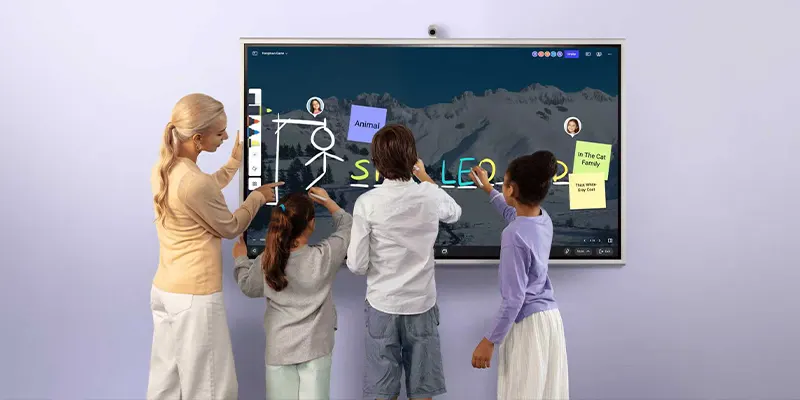
Interactive whiteboards allow teachers to build explanations step by step. They can highlight, circle, underline, or annotate directly over content. This layered approach helps students follow complex ideas more clearly. Instead of overwhelming learners with too much information at once, teachers reveal concepts gradually.
Multimedia Communication
Communication improves when multiple senses are engaged. Teachers can incorporate audio clips, videos, charts, and images within the same lesson. This combination ensures that messages are delivered clearly and memorably. Students don’t just hear information—they experience it.
Shared Access to Lesson Materials
After class, teachers can share saved lesson files with students. Those who were absent or need extra review can revisit the exact explanations shown in class. This transparency strengthens communication and ensures no student falls behind due to missed information.
Interactive Question and Answer Sessions
Teachers can display student questions on the board and work through answers collaboratively. This makes discussions visible to the entire class. Students feel heard, and clarification becomes a shared learning experience rather than a private exchange.
Encouraging Critical Thinking and Problem-Solving Skills
Interactive Scenario Exploration
Interactive whiteboards allow teachers to create scenarios where students adjust variables and observe outcomes. For example, modifying numbers in a graph or altering conditions in a science simulation encourages analytical thinking. Students learn by exploring cause and effect directly.
Collaborative Brainstorming Sessions
Students can come to the board and contribute ideas during brainstorming activities. Concepts can be grouped, reorganized, and expanded visually. Seeing connections form in real time strengthens reasoning and encourages deeper analysis.
Comparative Learning Opportunities
Teachers can display multiple sources—such as texts, maps, charts, or videos—side by side. Students can compare perspectives and evaluate information critically. This approach builds analytical skills and promotes thoughtful discussion.
Step-by-Step Logical Reasoning
Complex problems can be broken down into smaller steps on the board. Students can walk through each stage of reasoning visually. This structured approach improves logical thinking and helps learners understand not just the answer, but the process behind it.
Conclusion
Interactive whiteboards have truly revolutionized modern classrooms. They do far more than replace traditional boards—they transform how students learn, how teachers teach, and how classrooms function. By improving focus, streamlining assessments, strengthening communication, and fostering critical thinking, these tools create a more engaging and effective learning environment.
Students become active participants rather than passive observers, teachers gain efficiency and flexibility, and lessons come alive with multimedia and interactivity. Beyond academics, interactive whiteboards also prepare students for a digital future, equipping them with collaboration, problem-solving, and technology skills essential for the 21st century.
In short, interactive whiteboards are not just technology—they are a bridge connecting traditional education with innovative, immersive, and student-centered learning. When used thoughtfully, they make learning more exciting, personalized, and impactful for everyone in the classroom.
FAQs
1. Are interactive whiteboards suitable for all subjects?
Yes! They are highly versatile and can be used for math, science, language arts, social studies, and even art and music. The ability to integrate multimedia and interactive elements enhances any subject.
2. Do interactive whiteboards require internet access to work?
While many features benefit from internet access, such as online resources or cloud storage, basic functions like drawing, annotating, and running preloaded lessons can work offline.
3. How much training do teachers need to use interactive whiteboards effectively?
Most teachers can learn the basics within a few hours of hands-on practice. Advanced features may require additional training, but schools often provide workshops and tutorials.
4. Can interactive whiteboards improve student performance?
Yes. By increasing engagement, catering to different learning styles, and providing real-time feedback, interactive whiteboards help students understand and retain information better, which can positively impact performance.
5. Are interactive whiteboards cost-effective for schools?
Though the initial investment can be significant, interactive whiteboards save on paper, printing, and multiple other teaching tools over time. Combined with the benefits of enhanced learning and teacher productivity, they offer strong long-term value.