
Digital Signage Shop Application in Hotels and Hospitality
Understanding Digital Signage in the Hospitality Industry
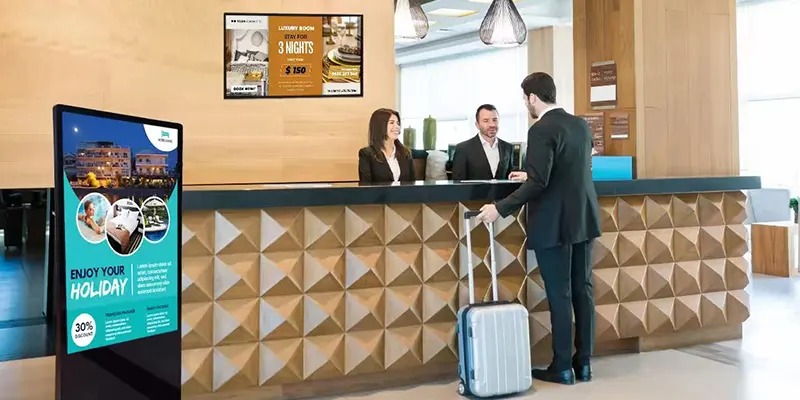
Digital signage has become an important part of the modern hospitality industry. Hotels use digital displays, interactive kiosks, and LED screens to share information, promote services, and improve guest communication. Unlike traditional printed signs, digital signage can be updated instantly, making it more flexible and efficient for busy hotel environments.
Many hotels invest in digital signage to create a more modern and engaging guest experience. These systems are commonly used in lobbies, restaurants, conference areas, and elevators to display schedules, promotions, wayfinding directions, and hotel announcements. Digital signage also helps hotels strengthen their branding while reducing printing costs and improving operational efficiency.
The Growing Demand for Hospitality Digital Signage
The demand for digital signage in the hospitality industry is growing quickly as hotels focus more on guest experience and modern communication. Travelers today expect fast access to information, personalized services, and convenient self-service options. Digital displays help hotels meet these expectations while creating a more professional and engaging environment.
Hotels also use digital signage to promote services, manage event information, and reduce printing costs. With real-time content updates and interactive features, digital signage has become an essential tool for improving efficiency and strengthening hotel branding in a competitive market.
Key Areas Where Hotels Use Digital Signage
Hotels use digital signage in many important areas to improve communication and guest experience. Common locations include hotel lobbies, restaurants, conference rooms, elevators, and reception areas. These displays provide information such as welcome messages, event schedules, directions, menus, and promotional offers.
Digital wayfinding systems are especially useful in large hotels and resorts, helping guests navigate the property easily. Hotels also use digital screens to advertise spa services, dining specials, and local attractions, creating more opportunities for guest engagement and additional revenue.
Enhancing Guest Experience Through Digital Displays
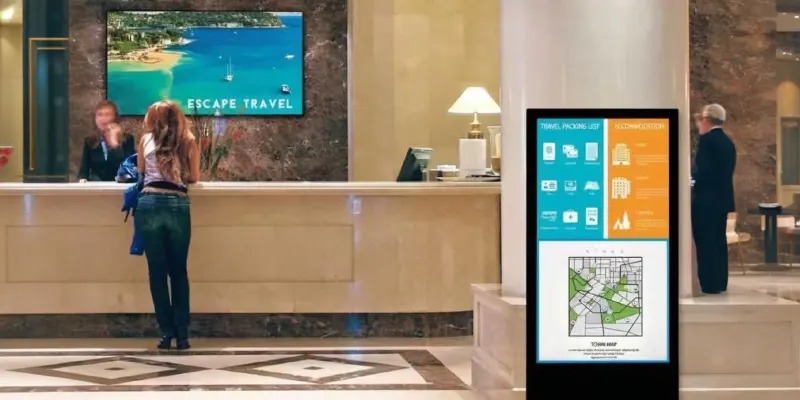
Digital displays help hotels create a more convenient and enjoyable guest experience. Guests can quickly access important information such as check-in details, event schedules, restaurant promotions, and directions around the property. This reduces confusion and improves overall satisfaction.
Hotels also use digital signage to provide personalized welcome messages and multilingual content for international travelers. With modern visuals and real-time updates, digital displays make hotel environments feel more professional, interactive, and guest-friendly.
Operational Benefits of Digital Signage in Hotels
Digital signage helps hotels improve daily operations by reducing printing costs and simplifying content management. Staff can update promotions, schedules, and announcements instantly through a centralized system, saving both time and labor.
These systems also improve communication during events, emergencies, or schedule changes by delivering real-time updates across the property. With cloud-based management and energy-efficient displays, digital signage offers hotels a flexible and cost-effective operational solution.
Conclusion
Digital signage has become one of the most influential technologies in modern hospitality. What once served as a simple display system has evolved into a powerful communication, branding, marketing, and operational platform. Hotels now rely on digital signage to improve guest experiences, streamline operations, increase revenue opportunities, and strengthen competitive positioning in an increasingly experience-driven market.
The growth of the hospitality signage industry reflects broader changes in traveler expectations. Guests want convenience, personalization, and seamless access to information. Digital signage satisfies those demands while helping hotels operate more efficiently behind the scenes. From interactive wayfinding systems and lobby displays to AI-powered personalization and real-time marketing campaigns, the possibilities continue expanding rapidly.
Hotels that invest strategically in digital signage are not simply modernizing their communication tools. They are creating smarter, more connected environments capable of delivering stronger guest satisfaction and long-term business growth.
FAQs
1. What is digital signage in hotels?
Digital signage in hotels refers to electronic display systems used for communication, marketing, wayfinding, event management, and guest engagement. These systems include LED screens, interactive kiosks, menu boards, and video walls.
2. Why do hotels use digital signage?
Hotels use digital signage to improve guest experience, reduce printing costs, promote services, provide real-time updates, and modernize communication throughout the property.
3. How does digital signage improve guest satisfaction?
Digital signage provides instant access to important information such as directions, event schedules, restaurant menus, and hotel promotions. This reduces confusion and creates a smoother guest experience.
4. What types of digital signage are most common in hospitality?
Common hospitality signage solutions include lobby displays, digital menu boards, interactive kiosks, wayfinding screens, conference signage, and elevator advertising displays.
5. Is digital signage expensive for hotels?
Costs vary depending on the size and complexity of the system. However, cloud-based software and affordable commercial displays have made digital signage much more accessible for hotels of all sizes.