
Shopping Mall Touch Screen Video Wall Project: Enhancing Interactive Customer Experience
In today's competitive retail landscape, shopping malls must go beyond traditional advertising and static directories to attract and retain visitors. This case study explores how a modern shopping mall upgraded its customer engagement strategy by installing a large-scale touch screen video wall, transforming the way shoppers interact with the space.
The project aimed to enhance interactive customer experience, improve wayfinding efficiency, and create new digital advertising opportunities—all while reinforcing the mall’s brand image as an innovative and customer-centric destination.
Client Background
The shopping mall is a high-traffic commercial complex located in a busy urban district, hosting:
200+ retail stores
Multiple anchor brands
A food court and entertainment zone
Weekly promotional events and seasonal campaigns
Despite strong foot traffic, the mall faced several operational and engagement challenges:
Visitors struggled to quickly locate stores and facilities
Static directories lacked flexibility and real-time updates
Limited interactive engagement with promotional campaigns
Underutilized digital advertising potential
Project Objectives
The mall management defined clear goals for the touch screen video wall project:
Improve customer wayfinding and reduce navigation confusion
Increase shopper engagement through interactive content
Support real-time promotion updates
Create a new revenue stream through digital advertising
Strengthen the mall’s modern and tech-forward brand image
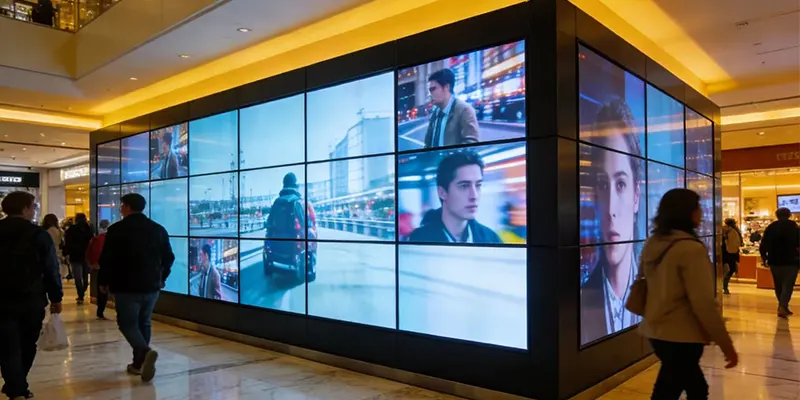
Solution: Large-Scale Touch Screen Video Wall Installation
1. Hardware Configuration
The project team installed a high-resolution LCD touch screen video wall featuring:
Ultra-narrow bezel displays for seamless visuals
4K resolution support for sharp, vibrant content
Multi-touch capability for simultaneous users
Durable commercial-grade panels for long daily operation
The video wall was strategically placed in the main entrance atrium, where daily foot traffic is highest.
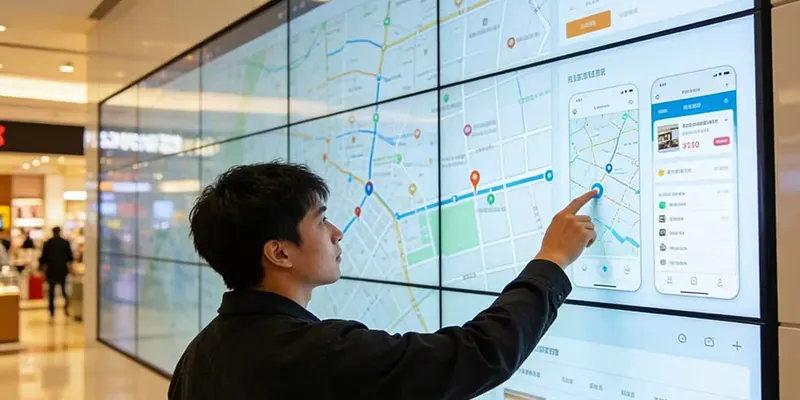
2. Interactive Wayfinding System
One of the core features was a fully interactive digital directory system. Visitors can:
Search for stores by name or category
View store locations on a 3D mall map
Generate step-by-step navigation routes
Scan QR codes to transfer directions to their smartphones
This dramatically reduced customer frustration and improved the overall navigation experience.
3. Dynamic Promotional Content
When not actively used for navigation, the video wall displays:
Ongoing promotional campaigns
Flash sales and limited-time offers
Event schedules
Brand advertisements
The system allows mall operators to update content remotely in real time, ensuring all promotions remain current and relevant.
Implementation Process
1. Strategic Planning and System Design
Before installation, a comprehensive site assessment was conducted to determine the most effective placement of the touch screen video wall. The project team analyzed foot traffic flow, peak congestion areas, lighting conditions, and visibility angles within the mall’s main atrium.
Based on this data, the team designed a customized solution that balanced screen size, viewing distance, and user accessibility. Network infrastructure, power supply, and structural support were carefully planned to ensure long-term stability and uninterrupted operation. This strategic preparation minimized installation risks and ensured the system would deliver maximum impact from day one.
2. Hardware Installation and Software Integration
The installation phase involved mounting high-resolution LCD panels with ultra-narrow bezels to create a seamless visual effect. The structure was reinforced for safety and durability, allowing continuous daily operation in a high-traffic commercial environment.
Simultaneously, the interactive software platform was integrated with the mall’s tenant directory database, promotional system, and event calendar. A user-friendly content management system (CMS) was deployed, enabling mall administrators to update advertisements, store listings, and promotional materials remotely in real time.
Extensive system testing was conducted to ensure smooth multi-touch responsiveness, fast navigation performance, and stable content playback.
Results and Measurable Impact
1. Enhanced Customer Engagement and Experience
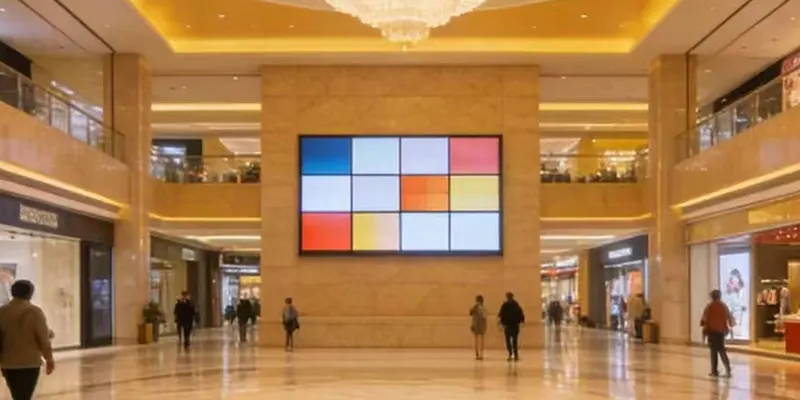
Following installation, the touch screen video wall quickly became a focal point within the mall. Shoppers actively engaged with the interactive directory, explored promotional campaigns, and discovered new stores and dining options.
The multi-touch functionality encouraged group interaction, making the experience more immersive and enjoyable. As a result, visitors spent more time in common areas, contributing to increased foot traffic circulation throughout the mall.
2. Improved Operational Efficiency and Wayfinding
Customer service desks reported a noticeable decline in navigation-related inquiries. With intuitive search functions and step-by-step digital navigation, shoppers were able to locate stores independently and more efficiently.
This improvement not only enhanced customer satisfaction but also reduced staff workload, allowing service teams to focus on higher-value assistance and personalized support.
3. Increased Advertising Revenue and Brand Value
The digital video wall created new monetization opportunities through premium advertising placements. Retail brands leveraged the high-visibility screen to promote new product launches, seasonal discounts, and limited-time offers.
Within months, the mall established a structured digital advertising model, generating additional recurring revenue. At the same time, the modern interactive display strengthened the mall’s brand image as an innovative, technology-driven retail destination.
Conclusion
The Shopping Mall Touch Screen Video Wall Project successfully transformed a traditional retail environment into an interactive digital experience hub. By improving navigation, increasing promotional visibility, and driving new revenue opportunities, the mall achieved its goal of enhancing interactive customer experience.
As retail spaces continue to evolve, interactive video walls are becoming an essential tool for malls seeking to stay competitive, modern, and customer-focused in the digital age.
RFQs
1. Q: What screen size and configuration are recommended for a shopping mall touch screen video wall?
A: The recommended size depends on the installation location and viewing distance. For main atrium areas with high foot traffic, a large-format LCD video wall (such as 2x2, 3x3, or customized configurations) with ultra-narrow bezels is ideal. Screen brightness, resolution (minimum Full HD or 4K), and multi-touch capability should also be considered to ensure visibility and smooth interaction in brightly lit commercial environments.
2. Q: Can the touch screen video wall integrate with our existing mall directory system?
A: Yes. The system can be fully integrated with your existing tenant database, store directory, event calendar, and promotional management system. A customized content management system (CMS) allows real-time updates, ensuring store information, promotions, and advertisements remain accurate and current.
3. Q: How many users can interact with the screen simultaneously?
A: Commercial-grade touch screen video walls support multi-touch functionality, allowing multiple users to interact at the same time. This is particularly beneficial in shopping malls where families or groups often search for information together, improving overall user experience during peak hours.
4. Q: What are the maintenance requirements for a mall touch screen video wall?
A: The system is designed for long daily operation in high-traffic environments. Routine maintenance typically includes surface cleaning, periodic system checks, and remote software updates. Most issues can be monitored and managed through remote diagnostics, minimizing downtime and operational disruption.