
How Hospitality Digital Signages Is Gradually Becoming Operational Infrastructure?
Hospitality digital signage was not originally introduced as an operational necessity. In its early stages, it was mainly used to modernize interiors and replace printed posters or menu boards. Over time, however, many operators began to realize that screens placed in guest-facing areas naturally became part of daily communication. As service environments grew more complex and information changed more frequently, hospitality digital signage started to shift from a visual enhancement into a practical tool that supports everyday operations.
1. Practical Use Replacing Decorative Intent
In hotels, restaurants, and cafés, digital signage is now commonly used to deliver functional information rather than purely promotional content. Menus, service instructions, directional guidance, and temporary notices often share screen space with branding messages. This change did not happen because of design trends, but because staff repeatedly faced the same questions from guests. Visual communication proved more efficient than verbal explanations or printed updates, especially in fast-paced hospitality environments.
2. Consistency Challenges Across Locations
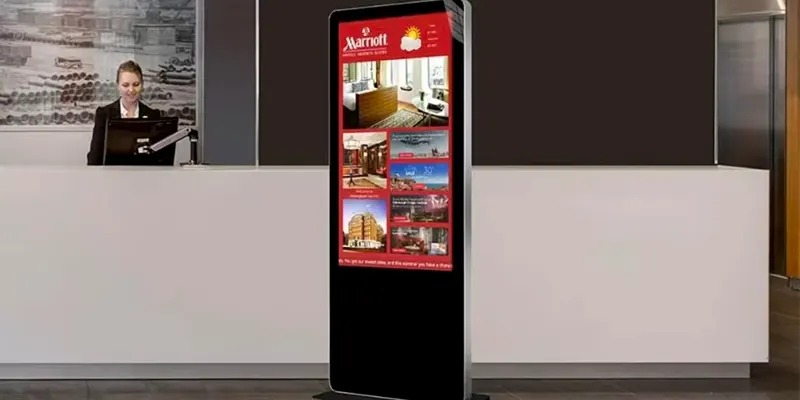
For hospitality brands operating multiple locations, maintaining consistent information has always been a challenge. Printed materials are slow to update and prone to inconsistencies. Hospitality digital signage addresses this problem by allowing centralized content control, making it possible to update menus, service messages, or promotional content remotely. In practice, this centralized approach is less about marketing flexibility and more about reducing operational errors and miscommunication between locations.
3. Reliability Matters More Than Specifications
As digital signage becomes embedded in daily operations, reliability becomes a key consideration. Hospitality environments often require displays to operate for long hours, sometimes continuously. Over time, operators tend to focus less on screen specifications and more on stability, heat management, and maintenance simplicity. A display failure during service hours can disrupt workflows and frustrate guests, making hardware reliability a practical business concern rather than a technical preference.
4. Impact on Service Flow and Guest Behavior
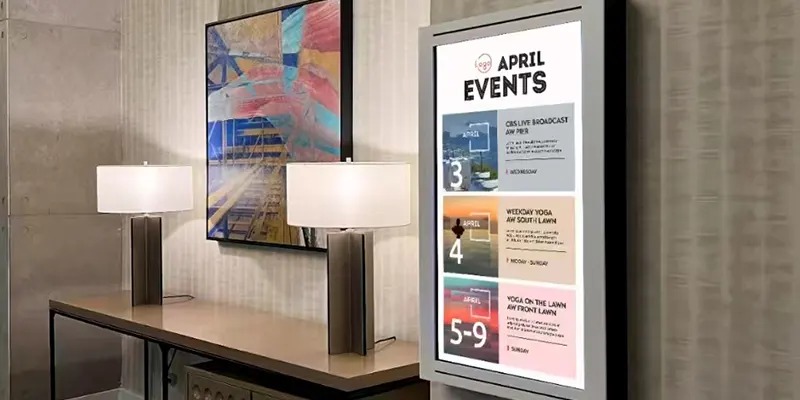
Well-positioned hospitality digital signage influences how guests move and make decisions within a space. Clear visual information can reduce hesitation at ordering points, improve order accuracy, and shorten perceived waiting time. In hotel lobbies or quick-service restaurants, screens often answer common questions before staff intervention is required. These effects are subtle but measurable, improving overall service efficiency without adding staff workload.
5. Integration With Daily Hospitality Systems
Many hospitality operators now integrate digital signage with content management platforms, scheduling tools, or point-of-sale systems. This allows on-screen information to reflect real operational conditions, such as time-based menus or service availability. Instead of static messaging, hospitality digital signage becomes responsive to daily workflows. This integration marks a shift from using screens as standalone displays to treating them as part of a broader digital environment.
Conclusion
Hospitality digital signage is no longer viewed simply as a modern design element. Its role has evolved into that of operational infrastructure, supporting communication, consistency, and service efficiency. As guest expectations continue to rise and hospitality operations become more dynamic, digital signage is increasingly planned with long-term practicality in mind rather than short-term visual impact.
FAQ
1. Is hospitality digital signage mainly for large hotel groups?
No. Smaller restaurants, cafés, and independent hotels often benefit just as much, especially when information changes frequently.
2. What information is most commonly shown on hospitality digital signage?
Menus, service instructions, directional guidance, promotions, and temporary notices are the most common uses.
3. Why is reliability emphasized so much in hospitality environments?
Because display downtime during service hours can disrupt operations and negatively affect guest experience.
4. Can hospitality digital signage function without system integration?
Yes, basic setups work independently, though integration improves efficiency and responsiveness.
5. Does hospitality digital signage fully replace printed signage?
Not entirely. Many operators use a mix of digital and printed signage depending on the type and permanence of information.