
What Is an LCD Video Wall Display?
An LCD video wall display is a large visual system made up of multiple LCD panels arranged together to form one seamless, high-impact screen. These displays are widely used in control rooms, retail spaces, corporate lobbies, transportation hubs, and public venues where high-resolution visuals and continuous operation are required. This article explains what an LCD video wall display is, how it works, its key benefits, common applications, and why it remains a popular choice for professional environments.
1. Understanding LCD Video Wall Displays
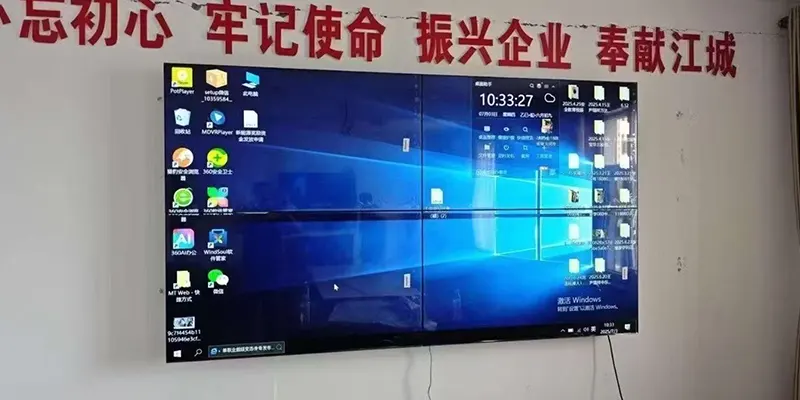
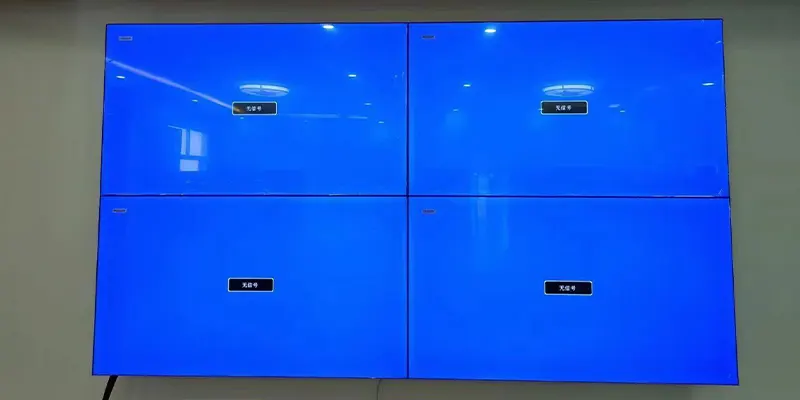
An LCD video wall consists of multiple commercial-grade LCD panels connected through a video wall controller. These panels work together to display one large image or multiple content sources simultaneously.
Key characteristics include:
Ultra-thin bezels for near-seamless visuals
High brightness and sharp image quality
Long operational lifespan
Support for 24/7 continuous use
LCD video walls are designed for indoor environments where clarity, detail, and reliability are essential.
2. How LCD Video Wall Displays Work
LCD video wall displays operate through a combination of commercial-grade LCD panels, a video wall controller, and content management software. Each panel functions as an individual display, but when combined, they act as a single, unified visual surface.
A video wall controller plays a critical role by distributing content across all screens. It ensures precise image alignment, synchronization, and scaling so that visuals appear continuous, even across multiple panels. This allows content to be displayed in several formats, including one large image or multiple independent windows.
Modern LCD video walls also support:
Remote content control and scheduling
Real-time data feeds and live video inputs
Integration with security systems, POS systems, or corporate networks
This flexibility makes LCD video walls suitable for both static presentations and dynamic, data-driven environments.
3. Benefits of LCD Video Wall Displays
LCD video wall displays offer a balanced combination of performance, reliability, and cost efficiency, making them a preferred choice for many professional applications.
Exceptional Image Clarity and Detail
LCD panels deliver high resolution, accurate colors, and strong contrast, which is especially important for displaying detailed content such as charts, dashboards, maps, and text-heavy visuals. This makes them ideal for control rooms and corporate environments where precision matters.
Scalable and Customizable Layouts
One of the major advantages of LCD video walls is their scalability. Organizations can start with a small configuration and expand it over time as needs grow. Panels can be arranged in various layouts to fit different wall sizes and viewing distances.
Reliable 24/7 Performance
Commercial LCD video wall panels are designed for continuous operation. They maintain stable brightness and performance over long periods, which is essential for environments like security monitoring centers or transportation hubs.
Cost-Effective Professional Solution
Compared to large LED walls, LCD video walls generally have a lower initial investment while still offering high-quality visuals. This makes them an attractive option for businesses seeking professional-grade displays without excessive cost.
4. Common Applications of LCD Video Wall Displays
LCD video walls are used across a wide range of industries:
Control Rooms: Monitoring security feeds, traffic systems, and data dashboards
Retail and Shopping Malls: Product promotions, branding, and digital advertising
Corporate Environments: Boardrooms, lobbies, and presentation spaces
Transportation Hubs: Flight schedules, wayfinding, and announcements
Education and Training Centers: Interactive learning and simulations
Their versatility makes them suitable for both functional and aesthetic purposes.
5. Features to Consider When Choosing an LCD Video Wall
Selecting the right LCD video wall requires careful evaluation of technical and practical factors to ensure long-term success.
Bezel Width
Ultra-narrow bezel panels create a more seamless visual experience, reducing visible gaps between screens and improving overall immersion.
Brightness and Viewing Conditions
The brightness level should match the ambient lighting of the space. Higher brightness ensures clarity in well-lit environments, such as retail stores or lobbies.
Resolution and Screen Size
Higher resolution provides sharper images, especially important for close viewing distances. Screen size and configuration should align with room dimensions and audience distance.
Mounting and Alignment Systems
Precision mounting systems are essential for proper alignment and long-term stability. Poor mounting can affect image uniformity and visual quality.
Software and System Compatibility
A reliable controller and user-friendly software are critical for managing content, layouts, and scheduling. Compatibility with existing IT infrastructure is also an important consideration.
6. Summary and Call to Action
LCD video wall displays provide a powerful visual solution for businesses and organizations that require high-resolution, scalable, and reliable display systems. With excellent image quality, flexible layouts, and continuous operation capabilities, they remain a popular choice for professional indoor environments.
If you are planning to install an LCD video wall or would like guidance on selecting the right system for your space, please contact us anytime. Our team is ready to help you design a customized video wall solution that meets your specific needs.
7. FAQ
1. What is the difference between an LCD video wall and an LED wall?
LCD video walls use multiple LCD panels with thin bezels, while LED walls use modular LED panels and offer bezel-free visuals.
2. Can LCD video walls operate 24/7?
Yes. Commercial-grade LCD panels are designed for continuous operation.
3. Are LCD video walls easy to maintain?
Yes. Individual panels can be serviced or replaced without shutting down the entire system.
4. How many screens can be used in an LCD video wall?
There is no fixed limit; configurations depend on space, resolution, and controller capacity.
5. Are LCD video walls energy-efficient?
Modern LCD panels are energy-efficient and consume less power compared to older display technologies.