
What is Digital Signage? A Beginner's Guide
Walk into a modern shopping mall, airport, restaurant, hotel, or even a school campus, and chances are you’ll see glowing digital screens displaying advertisements, announcements, menus, directions, or videos. That technology is called digital signage, and it has quietly transformed how businesses communicate with customers. Instead of relying on static printed posters that quickly become outdated, companies can now update their messages instantly through connected digital displays. It’s faster, more engaging, and far more flexible.
If you’re completely new to this technology, don’t worry. This guide breaks everything down in simple terms. By the end, you’ll understand how digital signage works, where it’s used, why businesses love it, and how beginners can start using it effectively.
1. Understanding Digital Signage
The Simple Definition of Digital Signage
Think of digital signage like a modern version of a bulletin board — except it’s dynamic, animated, and connected to the internet. A restaurant can instantly change its menu prices. A retail store can promote flash sales in real time. An airport can display live departure updates. Everything happens digitally without printing new materials every time information changes.
Businesses also love digital signage because it captures attention more effectively than static signs. Motion graphics, bright visuals, and videos naturally attract the human eye. Studies consistently show that moving content increases engagement and message retention compared to printed posters. In crowded environments where people are constantly bombarded with information, digital signage acts like a spotlight cutting through the noise.
How Digital Signage Differs From Traditional Signage

2. How Digital Signage Works
Displays and Screens
The most visible part of a digital signage system is the display itself. These screens come in many forms, including LCD displays, LED walls, OLED panels, interactive kiosks, and video walls. Each option serves different environments and budgets.
LCD displays remain the most widely adopted technology because they are affordable, reliable, and available in many sizes. Industry research shows LCD signage continues dominating the market globally. These displays are commonly used in retail stores, offices, restaurants, and schools.
LED displays, on the other hand, are especially popular for outdoor environments because they offer higher brightness and visibility in sunlight. Massive LED billboards in city centers are perfect examples. The LED signage market is also growing rapidly as costs continue falling.
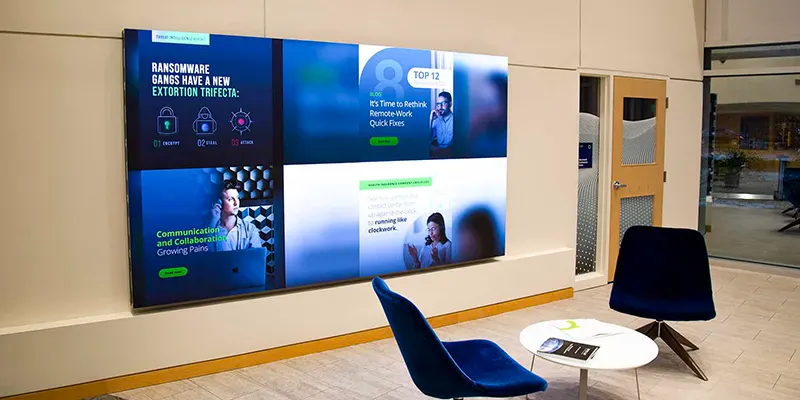
Screen size matters too. Smaller screens work well for menu boards or reception areas, while larger displays create immersive experiences in shopping malls or transportation hubs. Video walls combine multiple screens into one giant display for maximum visual impact.
Choosing the right screen is a little like choosing the right car. A compact sedan works for daily commuting, but a heavy-duty truck is better for construction work. Similarly, indoor office communication requires different hardware than an outdoor stadium display.
Media Players and Content Management Systems
Behind every digital screen is a media player and a Content Management System (CMS). These are the brains of the entire setup.
A media player is a small device connected to the screen that stores and plays content. Some modern displays even have built-in media players, reducing the need for external hardware. The player receives instructions from the CMS and displays scheduled content accordingly.
The CMS is where the magic happens. It’s software that allows users to upload videos, create playlists, schedule campaigns, and control screens remotely. Many modern platforms are cloud-based, meaning users can manage displays from anywhere with internet access.
Today’s digital signage software is becoming increasingly sophisticated. Industry experts note that cloud management, analytics, and AI integrations are becoming standard features across many platforms. Some systems even allow businesses to monitor proof-of-play reports, audience engagement, and performance metrics.
For beginners, a user-friendly CMS is incredibly important. Complicated software can turn a simple signage project into a frustrating technical nightmare.
3. Main Types of Digital Signage
Indoor Digital Signage
Indoor digital signage is the most common category and includes displays used inside buildings such as malls, offices, hospitals, schools, and restaurants.
Retail stores frequently use indoor displays to showcase promotions, highlight featured products, and improve customer experiences. Restaurants rely heavily on digital menu boards because they can instantly update pricing and promotions without reprinting menus.
Corporate offices also use digital signage for internal communication. Meeting room schedules, employee announcements, and company dashboards are often displayed on office screens. Schools and universities use digital displays for event schedules, campus maps, and emergency notifications.
Indoor systems generally prioritize image quality, slim designs, and cost efficiency because they don’t need extreme brightness or weatherproof protection.
Outdoor Digital Signage
Outdoor signage is built for harsh conditions. These displays must survive rain, heat, dust, sunlight, and temperature fluctuations while remaining highly visible.
Examples include roadside billboards, transit station displays, stadium screens, and outdoor advertising kiosks. Outdoor digital signage often uses high-brightness LED technology to remain readable even under direct sunlight.
Cities are increasingly investing in smart digital infrastructure, and outdoor signage plays a major role in those projects. Smart bus stops, digital wayfinding systems, and public information boards are becoming more common worldwide.
Outdoor signage is more expensive than indoor solutions because the hardware requirements are much tougher. Weatherproofing, cooling systems, and industrial-grade components all add to the cost.
Interactive Kiosks and Touch Screens
Interactive digital signage takes engagement to another level by allowing users to interact directly with the screen.
You’ve probably already used one without realizing it. Self-checkout machines, self-ordering restaurant kiosks, airport check-in stations, and interactive directories all fall into this category.
The U.S. digital signage market shows strong growth in kiosk installations, especially in retail and hospitality environments. Businesses love kiosks because they improve efficiency while reducing labor pressure.
Touch-screen systems also collect valuable customer data. Businesses can analyze user behavior, popular menu items, or browsing habits to improve operations and marketing strategies.
Interactive signage feels less like advertising and more like a conversation between the business and the customer.
4. Key Benefits of Digital Signage
Better Customer Engagement
Digital signage grabs attention far more effectively than printed signs. Humans are naturally drawn to movement and bright visuals. Animated content feels alive, while static posters often blend into the background.
Interactive features make the experience even more memorable. Customers can browse products, explore menus, or navigate locations themselves instead of waiting for assistance.
Easy Remote Content Updates
One of the biggest advantages of digital signage is centralized control.
Remote management also supports flexibility. Seasonal campaigns, flash sales, or urgent notifications can go live immediately without printing delays.
Cloud-based management platforms are becoming industry standard because businesses increasingly value scalability and convenience.
Cost Savings Over Time
Digital signage requires upfront investment, but it often reduces long-term costs significantly.
Businesses save money on printing, shipping, installation, and manual labor. Instead of constantly producing disposable marketing materials, companies reuse the same hardware for years while updating content digitally.
Energy-efficient technologies are also improving rapidly. New e-paper displays and low-power signage solutions reduce electricity consumption while maintaining visibility.
For businesses with frequent content changes, the long-term return on investment can be substantial.
5. Choosing the Right Digital Signage Solution
Hardware Considerations
Choosing hardware depends heavily on environment, budget, and goals.
Indoor retail stores may prioritize sleek 4K LCD displays, while outdoor advertising requires weatherproof LED technology with high brightness levels.
Businesses should also consider screen size, mounting options, touch capabilities, and durability. Hardware reliability matters because failed displays create poor customer experiences.
Software and CMS Features
The CMS often determines how easy or frustrating the system becomes.
Beginners should prioritize software with intuitive scheduling, drag-and-drop editing, cloud access, and strong technical support. AI-driven analytics and automation features are becoming increasingly common in modern platforms.
Scalability matters too. A small business might start with one screen today but expand to dozens later.
Budget and Scalability
Digital signage costs vary dramatically depending on hardware quality, software subscriptions, installation complexity, and content creation.
The key is balancing short-term affordability with long-term flexibility.
Conclusion
Digital signage has evolved far beyond simple advertising screens. It has become a powerful communication platform used across retail, healthcare, hospitality, education, transportation, and corporate environments. Businesses love it because it’s flexible, engaging, scalable, and efficient.
For beginners, the technology might initially seem complicated, but the core idea is actually simple: replace static communication with dynamic digital experiences. Once you understand the relationship between displays, media players, software, and content strategy, everything starts making sense.
The industry continues growing rapidly as businesses invest in smarter customer experiences and real-time communication tools. From AI-powered analytics to energy-efficient e-paper displays, digital signage is becoming more intelligent, more sustainable, and more accessible than ever before.
If there’s one thing to remember, it’s this: digital signage isn’t just about screens. It’s about delivering the right message to the right people at the right moment.