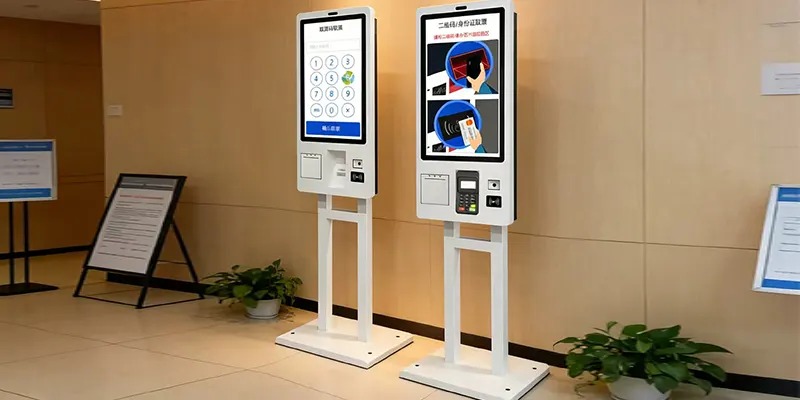
How Self-Service Ordering Kiosks Improve Efficiency and Customer Experience: Customer Feedback
Self-service ordering kiosksare increasingly being adopted in restaurants, cafés, fast-food chains, and food courts. Originally introduced to reduce queues and modernize ordering processes, these systems are now playing a broader role in improving operational efficiency and enhancing customer experience. Based on feedback from multiple businesses, self-service ordering kiosks have become a practical and reliable tool in daily operations.
1. Reducing Queues and Improving Order Flow
One of the most common pieces of feedback from restaurant owners is the significant reduction in waiting lines. By allowing customers to place orders directly through self-service ordering kiosks, peak-hour congestion at cashier counters is noticeably reduced.
Customers can browse menus, customize their orders, and complete payments independently. This streamlined process helps improve order flow and reduces pressure on front-line staff.
2. Increasing Order Accuracy
Another key advantage reported by users is improved order accuracy. When customers input their own selections through self-service ordering kiosks, the risk of miscommunication is minimized.
Restaurants noted fewer order errors compared to traditional cashier-based ordering. This not only improves customer satisfaction but also reduces food waste and operational inefficiencies.
3. Enhancing Customer Experience
Businesses observed that customers appreciate the control and convenience offered by self-service ordering kiosks. The ability to view images, detailed descriptions, and pricing information helps customers make decisions more confidently.
In addition, multilingual interfaces and intuitive navigation make the self-service ordering kiosks accessible to a wider range of users, including tourists and first-time visitors.
4. Supporting Staff Efficiency
Customer feedback also highlights the impact on staff productivity. With self-service ordering kiosks handling routine order-taking tasks, staff can focus on food preparation, service quality, and customer support.
This shift allows businesses to optimize labor allocation without compromising service standards, especially during busy periods.
5. Providing Flexible Content and Menu Management
Many businesses value the flexibility of updating menus and promotions through self-service ordering kiosks. Items can be added, removed, or modified in real time without reprinting materials.
This makes it easier to manage seasonal offers, limited-time promotions, and pricing adjustments, ensuring that customers always see accurate and up-to-date information.
Conclusion
Customer feedback shows that self-service ordering kiosks are no longer just a technological upgrade, but a practical solution for improving restaurant operations. By reducing queues, increasing accuracy, and enhancing customer experience, these systems help businesses operate more efficiently while meeting modern customer expectations.
FAQ
1. Are self-service ordering kiosks suitable for small restaurants?
Yes. Many small businesses benefit from improved efficiency and reduced reliance on cashier staff through self-service ordering kiosks.
2. Do customers easily adapt to self-service ordering kiosks?
Most customers adapt quickly, especially when the interface is simple and user-friendly.
3. Can self-service ordering kiosks support multiple languages?
Yes. Many systems offer multilingual options to serve diverse customer groups.
4. Do self-service ordering kiosks reduce labor costs?
They can help optimize staffing by reducing the need for order-taking roles.
5. Are self-service ordering kiosks difficult to maintain?
Most modern systems are designed for stable operation with minimal maintenance requirements.