
How to Effectively Use Elevator Digital Signage?
Elevator Digital Signage has become a common feature in office buildings, residential complexes, hotels, and shopping centers. Located in confined spaces where people naturally pause, these displays offer a consistent opportunity to communicate with occupants and visitors. Unlike large-format public displays, elevator screens operate within a limited viewing time, which influences how content is designed and delivered. Their effectiveness depends less on visual scale and more on timing, clarity, and relevance.

1. Short Dwell Time in Elevator Environments
One defining characteristic of elevator digital signage is the short duration of audience attention. In most cases, viewers spend only a few seconds inside the elevator or waiting in front of it. This requires content to be concise and immediately understandable. Long text or complex visuals are often ineffective. Instead, brief messages, clear headlines, and simple visuals tend to perform better in conveying information within limited timeframes.
2. Selecting Appropriate Content Types
Content used in elevator digital signage typically combines informational and promotional elements. Common examples include building notices, safety reminders, weather updates, and selected advertisements. In mixed-use environments, balancing these content types is important to maintain relevance. Overly promotional content may be ignored, while purely informational content may not fully utilize the communication potential of the display.
3. Placement Within Elevator Spaces
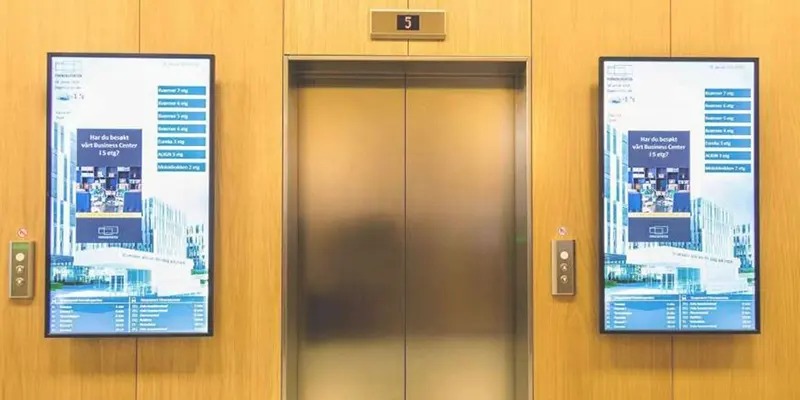
Elevator digital signage can be installed inside elevator cabins or in waiting areas outside the elevator. Each placement serves a different purpose. Interior screens are suitable for short, repetitive messaging, while displays in waiting areas allow slightly longer viewing time. In some buildings, both placements are used together to create a continuous flow of information as people approach and use the elevator.
4. Maintaining Content Relevance and Update Frequency
Because elevator displays are viewed repeatedly by the same audience, outdated or repetitive content can quickly lose effectiveness. Regular updates help maintain attention and ensure that information remains relevant. Digital systems allow content to be scheduled and adjusted without physical replacement, making it easier to reflect current conditions such as announcements, events, or temporary notices.
5. Ensuring Reliable Operation in Confined Environments
Elevator environments impose specific operational constraints, including limited space, vibration, and continuous usage. Elevator digital signage must be stable and capable of operating for extended periods without interruption. Screen failure in such a visible location can affect user perception of building management. For this reason, reliability and ease of maintenance are often prioritized in deployment decisions.
Conclusion
Elevator digital signage is most effective when it aligns with the constraints of short viewing time and repeated exposure. Clear messaging, appropriate content selection, strategic placement, and consistent updates all contribute to its practical value. Rather than serving as large-scale advertising platforms, elevator displays function as focused communication tools within controlled indoor environments.
FAQ
1. Where is elevator digital signage most commonly used?
It is widely used in office buildings, residential complexes, hotels, and commercial properties.
2. What type of content works best on elevator displays?
Short, clear messages such as notices, reminders, and brief promotional content are most effective.
3. Should displays be placed inside or outside the elevator?
Both options are used. Interior screens suit short messages, while exterior screens allow longer viewing.
4. How often should elevator digital signage content be updated?
Regular updates are recommended to maintain relevance and avoid repetition.
5. What are the key operational considerations for elevator displays?
Stability, durability, and ease of maintenance are important due to continuous use and confined space.